When architecture becomes scaffolding for the forest to come
We’ve learned how to build around trees.
The next challenge is learning how to build for them—designing architecture that anticipates growth, succession, and its own eventual obsolescence.
Preservation is the past tense of sustainability. Regeneration is the future.
From Preservation to Partnership
This series began with the math of not cutting down existing trees. It examined the false economies of elevated structures and luxury wellness pavilions. It explored how affordable housing can adopt preservation tactics.
But what if we stopped thinking defensively—protecting what exists—and started thinking generatively?
What if our buildings weren’t monuments, but mentors for the forests to come?
This isn’t theoretical. A small but growing number of architects are already designing this way.
Global Precedents in Succession Design
Japan: Architecture as Temporary Tenant
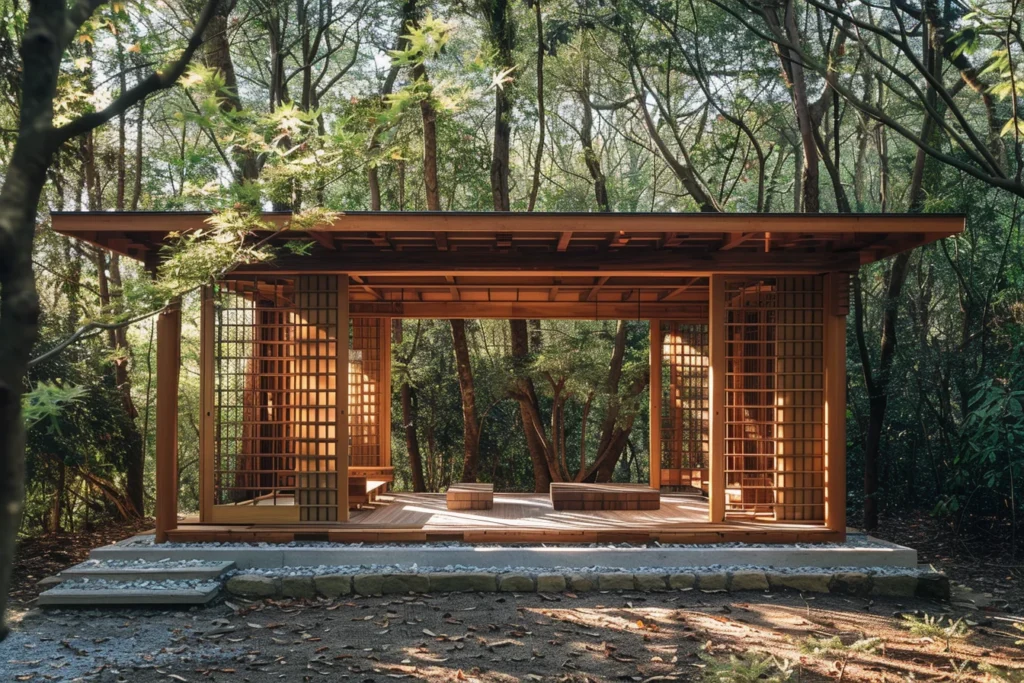
Kengo Kuma’s porous timber structures and Shigeru Ban’s temporary pavilions embody a philosophy where buildings are designed to yield. In Japanese forest-temple traditions, structures are rebuilt every generation—synchronized with forest cycles rather than competing with them.
The building doesn’t outlast the tree. They coexist, and when the tree wins, that’s success.
Scandinavia: Engineering for Root Expansion
Norwegian woodland cabins are increasingly designed with foundations pre-engineered to accommodate root expansion. Adjustable deck systems allow panels to be removed as saplings mature. The structure adapts rather than conflicts.
Switzerland: Growth Corridors in Urban Blocks
A landscape architecture firm in Zurich is mapping 50-year canopy corridors through residential blocks—reserving voids in hardscape and building foundations for trees that don’t exist yet. The master plan shows not what is, but what will be.
The Mechanics of Designing for What’s Coming
Five principles we’re developing:
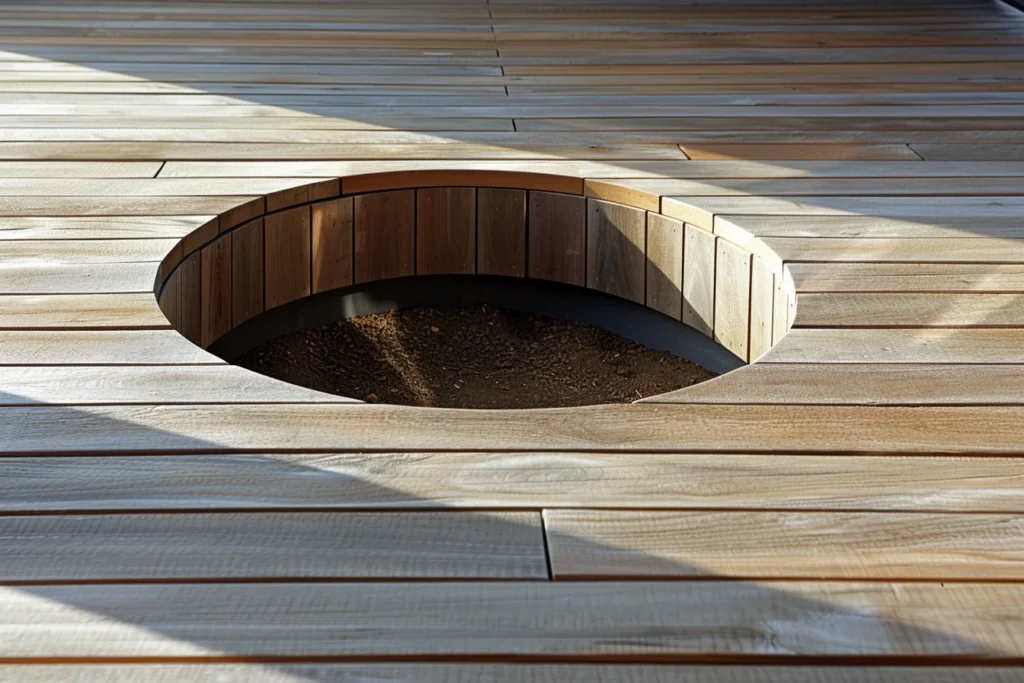
Oversized Openings: Reserve voids in decks and foundations for future saplings (10-20 year horizon)
Adjustable Deck Systems: Modular piers and removable panels that adapt to root expansion (15-40 year horizon)
Degradable Fill Zones: Strategic use of materials that decompose and allow root penetration (20-50 year horizon)
Vegetation Corridors: Long-term canopy planning mapped into site design (50-100 year horizon)
Succession Modeling: Using arborist growth data to simulate future tree positions and design around them preemptively
The technical challenge isn’t the individual tactics—it’s integrating time as a design material.
Design for Succession, Not Permanence
Traditional “design for disassembly” aims for material reuse. Design for succession aims for graceful replacement.
Buildings become scaffolding for ecosystems—to be outgrown, not preserved forever.
A speculative timeline:
Years 0-10: Saplings planted in pre-mapped voids within building footprint
Years 10-40: Structure coexists with maturing canopy, adaptive modifications begin
Years 40-80: Partial disassembly as trees reach full size; rewilding accelerates
Years 80-100+: Forest integrates remnants; building becomes archaeological layer
The carbon math of succession design:
At year 50, a structure designed for succession has:
Avoided 12 tons of embodied carbon (didn’t rebuild when trees grew)
Generated 35 tons of sequestered carbon (mature trees it made space for)
Created thermal and ecological benefits compounding annually
Sustainability isn’t measured in certifications. It’s measured in centuries.
The 100-Year Question
We’re collaborating with ecologists and climate scientists on something we call The 100-Year Atlas—a predictive design tool that:
Models tree growth for major urban species over century timescales
Calculates carbon sequestration vs. embodied carbon in materials
Simulates root expansion and canopy development
Suggests where to “leave space” in current designs
Visualizes what your building could look like when forest overtakes it
The uncomfortable part: It forces designers to imagine their work’s obsolescence.
The liberating part: It redefines success as “how well did you set the forest in motion?”
What We’re Building
The Future Forest Design Atlas is in development—an interactive tool for architects, landscape designers, and planners to:
Input site conditions and design intentions
Model tree species and growth trajectories
See their building at 25, 50, and 100 years
Calculate long-term carbon outcomes
Design adjustable/removable elements for key growth phases
But it’s more than software. It’s a methodology shift.
We’re working with:
Arborists modeling growth patterns for climate-changed futures
Structural engineers designing for intentional obsolescence
Material scientists studying degradable foundations
Philosophers and ethicists exploring architecture’s relationship to time
Indigenous designers whose cultures have practiced this for millennia
The research questions we’re chasing:
What’s the optimal foundation system for 50-year tree coexistence?
How do building codes accommodate structures designed to be overtaken?
What are the insurance and liability frameworks for buildings with planned obsolescence?
How do we value property that’s designed to become forest?
The Ethics of Letting Go
This approach requires confronting architecture’s ego.
We design permanence. We build legacy. We want our work to last.
But what if the highest form of architectural achievement is designing something that gracefully disappears?
“Architecture that anticipates its own obsolescence is the purest form of humility.”
It’s a profound shift: from architect as monument-builder to architect as ecosystem initiator.
Who This Is For
This isn’t for everyone. And that’s fine.
If you’re thinking:
“My clients would never accept a building designed to be temporary”
“Building codes don’t allow this”
“There’s no business model for graceful obsolescence”
You’re probably right. This is frontier territory.
But if you’re asking:
“What if we designed for the century, not the decade?”
“How can my work participate in ecological succession instead of resisting it?”
“What would architecture look like if we accepted impermanence?”
We should talk.
What We’re Looking For
Collaborators in succession design:
Architects willing to prototype adjustable building systems
Developers interested in long-term ecological value propositions
Cities exploring policy frameworks for regenerative architecture
Material scientists working on degradable structural systems
Anyone designing for timescales beyond their own lifetime
Projects we want to study:
Buildings with removable sections designed for tree growth
Master plans that map century-scale canopy development
Successful examples of intentional architectural obsolescence
Indigenous or traditional practices of building-forest coexistence
Research partnerships:
We’re documenting succession design principles, growth modeling methodologies, and long-term carbon accounting frameworks. If you’re researching:
Time-based design ethics
Ecological succession in built environments
Architecture and deep time
Climate adaptation through regenerative design
Let’s collaborate
Get in Touch
Ready to design beyond your own lifetime?
Contact us to discuss:
The 100-Year Atlas methodology (beta access available)
Succession design principles for your project type
Collaboration on frontier research
Speaking engagements on regenerative time-based design
Want to see your project in 2125?
We’re offering visualization partnerships for projects exploring succession design. We model your building’s century-scale future—including tree growth, material decay, and ecological integration.
“Our role isn’t to finish the landscape—it’s to set it in motion.”
“What if the greatest buildings are the ones that know when to let the forest win?”
When the most sustainable building is the one that never existed
The Beautiful Lie
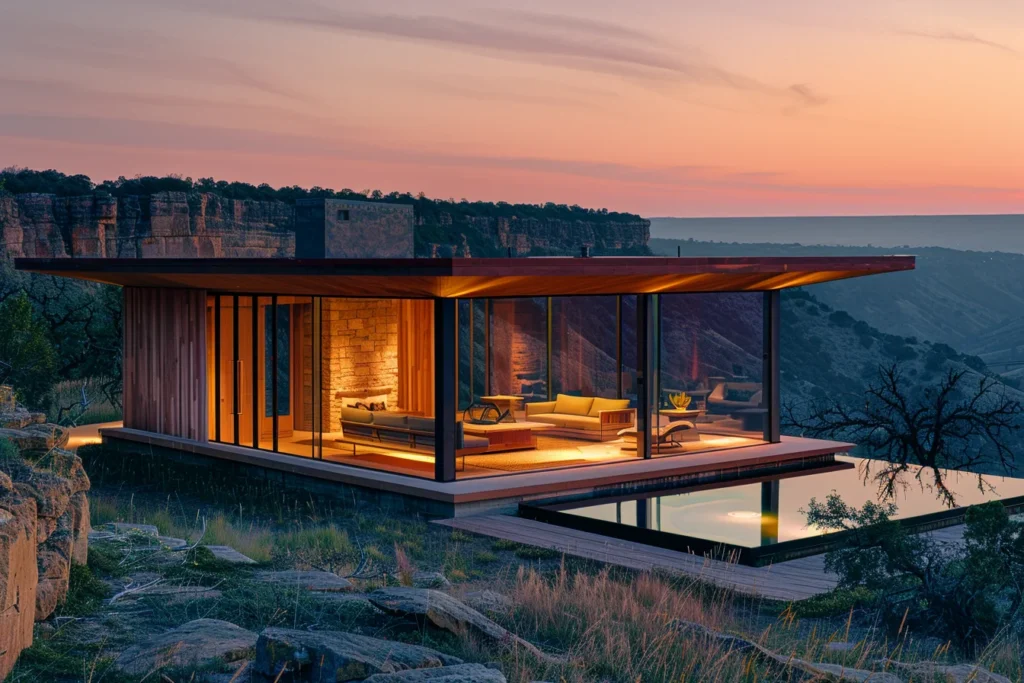
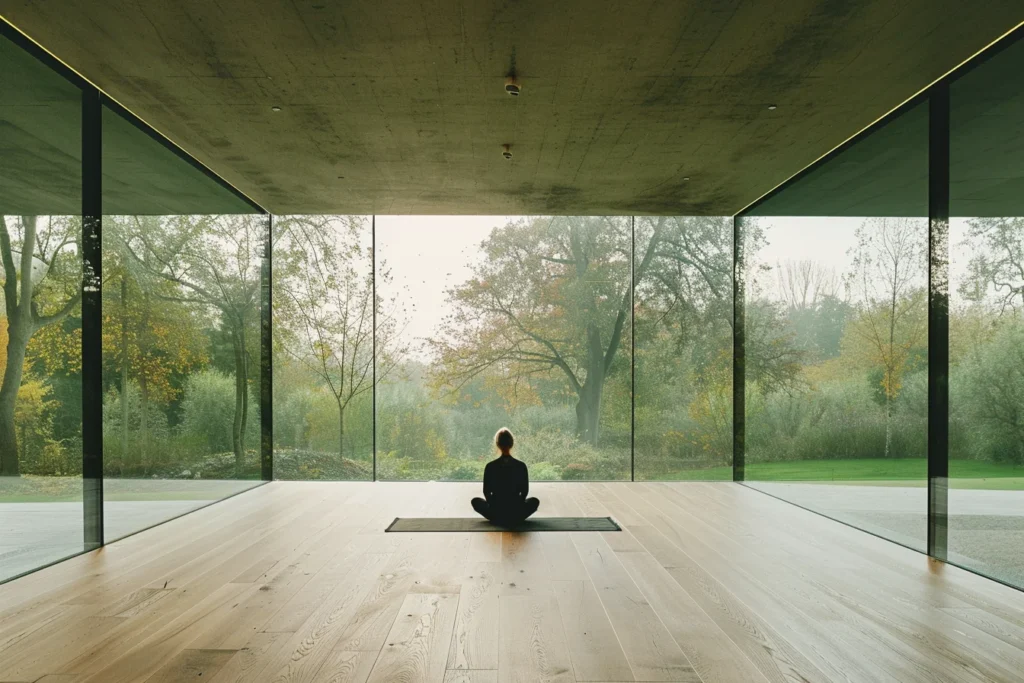
Caption: “Sustainable Wellness Pavilion. 60m² single-use space. 18 cubic meters of milled cedar. 40 tons of concrete piers. 47 tons of embodied CO₂.”
It’s serene. It photographs beautifully. The marketing copy writes itself: A sanctuary for mindful living. A space to reconnect with nature. Sustainably designed for holistic wellness.
The materials are “responsibly sourced.” The energy systems are “efficient.” The design is “site-sensitive.” Every checkbox marked. Every certification pursued. Every Instagram angle optimized.
But let’s ask the question no one wants to answer in the client meeting:
Why does reconnecting with nature require 60 square meters of new construction?
We’ve spent two articles in this series talking about how we build—the math of tree preservation, the realities of elevated structures. We’ve evaluated materials, carbon calculations, and lifecycle costs. We’ve quantified, measured, and optimized.
But we’ve avoided the harder question. The one that makes even well-meaning architects uncomfortable.
What if true sustainability begins not with how we build, but with questioning why we build at all?
This isn’t about materials or methods. It’s about necessity. And in the world of luxury wellness architecture, necessity has left the building.
The Wellness Aesthetic as Green Camouflage
Let’s trace how we arrived here.
The Post-Pandemic Pivot
The wellness architecture boom didn’t emerge from a vacuum. It crystallized in 2020-2022, when affluent clients trapped at home discovered they couldn’t access their usual escape routes—destination spas, retreat centers, yoga studios.
The solution? Bring the retreat home.
What followed was a gold rush of residential wellness construction:
Home yoga studios with “temple-like” qualities
Scandinavian-style saunas nestled in backyards
Meditation pavilions cantilevered over hillsides
Cold plunge pools integrated into “wellness circuits”
Tea houses designed for “mindful contemplation”
Mark Davidson, residential architect in Boulder, Colorado, watched the trend accelerate: “Pre-pandemic, maybe 10% of our high-end residential clients requested dedicated wellness spaces. By 2021, it was 70%. By 2023, it was effectively mandatory for projects over $3 million. The wellness pavilion became what the wine cellar was in 2005—a status marker disguised as lifestyle necessity.”
The Language of Justification
These projects don’t market themselves as indulgences. They’re wrapped in the language of health, healing, and environmental connection.
The architectural statements are remarkably consistent:
“Blurring the boundary between inside and outside”
“Creating space for mindful practice”
“Honoring the natural landscape”
“Sustainable materials in harmony with the site”
“A refuge for holistic wellness”
Dr. Sarah Chen, cultural anthropologist studying luxury consumption patterns: “The wellness pavilion represents a fascinating cultural phenomenon—consumption justified through self-care rhetoric. By framing luxury construction as health infrastructure, clients and architects alike avoid confronting the environmental cost. It’s not excess—it’s wellness. It’s not a want—it’s a need.”
The Paradox at the Core
Here’s what no one says out loud: We’re bulldozing nature to reconnect with nature.
A case study from Marin County, California, illustrates the contradiction:
Project: Private meditation pavilion overlooking coastal hills Site: 0.3 acres of thriving native chaparral (California sagebrush, toyon, coast live oak saplings) Design approach: Clear 80m² for pavilion and access path, install pier foundation, construct cedar and glass structure Budget: $485,000 Stated goal: “Create a sanctuary for nature-based meditation practice”
What was destroyed to create the sanctuary:
47 mature shrubs (average age 15-20 years)
12 oak saplings (8-10 years growth)
Critical habitat for native pollinators
Established soil microbiome
Natural drainage patterns
What was built:
60m² enclosed structure used approximately 90 minutes per week
Climate-controlled interior (defeating the “connection to nature” premise)
Lighting system for evening meditation
Heated floors for winter comfort
The client’s perspective: “We wanted a space to appreciate the landscape without disturbing it.”
The ecological perspective: The undisturbed landscape they wanted to appreciate was the disturbance.
“We’re burning carbon to find our center.” — James Liu, environmental consultant
The Numbers Don’t Lie
Let’s remove the aesthetic veneer and look at the environmental cost.
Embodied Carbon Analysis: The 60m² Wellness Pavilion
Typical specifications for a “modest” luxury wellness space:
Embodied carbon: ~8,500 kg CO₂ Savings vs. new construction: 38,500 kg CO₂ (82% reduction) Cost: $45,000-65,000 vs. $400,000-600,000 Usage impact: Identical functionality
Alternative 2: Attic/Basement Transformation
Embodied carbon: ~6,200 kg CO₂ Savings vs. new construction: 40,800 kg CO₂ (87% reduction)
Alternative 3: Shared Wellness Facility Membership
Approach: Join local yoga studio, meditation center, or wellness cooperative Annual embodied carbon allocation: ~85 kg CO₂ (amortized facility construction divided by members) 10-year carbon footprint: 850 kg CO₂ Savings vs. new construction: 46,150 kg CO₂ (98% reduction) Additional benefits:
Community connection (arguably more aligned with wellness philosophy)
Professional instruction
Varied programming
Zero maintenance burden
What is embodied carbon? The total CO₂ emissions from material extraction, manufacturing, transportation, and construction—everything that happens before the building opens.
Why it matters for small structures: Small buildings have high carbon intensity per square foot because they require foundations, roofs, and systems that don’t scale down proportionally.
Typical embodied carbon for common materials:
Concrete: 350-400 kg CO₂/m³
Steel: 1,850 kg CO₂/ton
Lumber (milled): 180-250 kg CO₂/m³
Glass (low-E): 85-110 kg CO₂/m²
Cedar (premium): 220-280 kg CO₂/m³
Rule of thumb: A small standalone structure (50-100m²) typically generates 400-800 kg CO₂ per m². Converting existing space is usually 80-90% lower.
The Myth of “Personal Sanctuaries”
The marketing narrative around wellness pavilions centers on a seductive idea: authentic wellness requires personal space. Solitude. A sanctuary that’s yours.
But let’s examine what we’re really building—and why.
Status Minimalism
Dr. Rachel Morgan, sociologist studying luxury consumption at Stanford, identified a phenomenon she calls “status minimalism”: “The wealthy perform restraint through carefully curated simplicity—but the performance itself requires vast resources. A $500,000 meditation pavilion with nothing in it except a cushion isn’t actually minimalist. It’s maximalist resource consumption disguised as zen.”
She continued: “The pavilion signals two things simultaneously: ‘I care about wellness’ and ‘I can afford private space for it.’ It’s conspicuous consumption in the language of consciousness. The structure itself becomes the status marker.”
The Performance of Care
Why build a separate structure when existing space could serve the same function?
The honest answer, spoken privately by clients but rarely admitted publicly: Because it photographs better. Because it demonstrates commitment. Because guests will notice.
Linda Hartwell, the architect we’ve quoted in previous articles, reflected on her own complicity: “I’ve designed three wellness pavilions in my career. Beautiful projects. Award submissions. But if I’m honest? Two of those clients used the spaces maybe 50 times in the first year, then rarely after. They became expensive storage for yoga mats. The real function wasn’t practice—it was the ability to tell guests, ‘Oh, that’s our meditation pavilion.’ The building was the wellness signifier, not the wellness enabler.”
Moral Licensing in Design
Environmental psychologists document a phenomenon called “moral licensing”: when people feel virtuous about one choice (using “sustainable materials”), they feel entitled to less sustainable choices elsewhere (building an unnecessary structure).
The wellness pavilion is moral licensing architecturalized.
By checking sustainability boxes—reclaimed wood! solar panels! native landscaping!—clients and architects alike create permission for the fundamental unsustainability: constructing a building that doesn’t need to exist.
Dr. James Whitmore, environmental psychologist: “The question isn’t whether the pavilion is built sustainably. The question is whether building it at all aligns with the values it claims to embody. True mindfulness might mean recognizing that you don’t need it.”
The Alternatives: Radical Common Sense
Let’s be clear: this isn’t an argument against wellness practice. It’s an argument for honesty about what wellness actually requires.
Adaptive Reuse: The Unsexy Solution
Most homes already contain usable space that could serve wellness functions:
Option 1: The Garage
Average 2-car garage: 36-40m²
Perfect dimensions for yoga, meditation, light exercise
Already has electrical, usually has climate control
Conversion cost: 10-15% of new pavilion cost
Embodied carbon: 15-20% of new pavilion
Maria Santos, interior designer specializing in adaptive reuse: “I’ve converted twelve garages into wellness studios. Every single client initially wanted a separate pavilion. Every single one is now grateful they didn’t build it. They actually use these spaces more because they’re convenient—attached to the house, accessible in bad weather, no pilgrimage required.”
Option 2: The Attic/Basement
Often underutilized space with good dimensions
Inherent quietness (separated from main living zones)
Natural temperature regulation (especially basements)
Can be stunning with proper finishing
Option 3: The Master Bedroom Reconfiguration
Modern master suites are often 30-40m²
Could be divided: sleeping zone + wellness zone
No new construction required
Forces actual use (it’s where you already are)
Shared Infrastructure: The Forgotten Solution
Here’s a truth that contradicts the luxury wellness narrative: community spaces are often superior to private ones.
Advantages of shared wellness facilities:
Professional programming: Trained instructors, varied classes, skill development
Community connection: Social wellness, relationship building, accountability
Resource efficiency: Hundreds of people using the same space instead of hundreds of private pavilions
Maintenance: Someone else handles it
Variety: Access to equipment and amenities no home pavilion could match
The carbon math:
Private 60m² pavilion: 47,000 kg CO₂, 1-2 users
Shared 400m² studio: 280,000 kg CO₂, 200 members
Per-person embodied carbon:
Private: 47,000 kg
Shared: 1,400 kg (97% reduction)
counterargument heard from clients: “But I can’t always get to a studio when I want to practice.”
Honest response: How often do you actually practice? If the answer is “not as much as I’d like,” building private space won’t change that. The barrier isn’t access—it’s motivation. Shared space often increases consistency through community accountability.
Outdoor Integration: Maximum Effect, Minimal Material
[SIDEBAR B – 10 Ways to Design for Wellness Without Building Anything]
Garden platform: Simple deck on grade, 4m², minimal foundation
Screened porch conversion: Add screens to existing covered patio
Tree platform: Elevated deck around existing tree using minimal piers
Hardscape meditation circle: Gravel or stone circle in garden
Garden pathway system: Meditative walking path through existing landscape
Membership investment: Put pavilion budget into lifetime studio membership + home retreat weekends
The most sustainable wellness architecture might be a meditation cushion and the discipline to use it.
The Cultural Reckoning
We need to talk about architecture’s complicity in selling eco-aesthetics to the affluent.
How Sustainability Became a Style
Somewhere in the past two decades, sustainability shifted from an ethic to an aesthetic. From a way of thinking to a way of marketing.
You can see it in the language:
“Sustainable luxury”
“Eco-conscious design”
“Green living spaces”
“Environmentally sensitive architecture”
These phrases don’t describe actual environmental performance. They describe a visual style: natural materials, large windows, integration with landscape, minimalist interiors.
The wellness pavilion has become what the infinity pool was in 2005—beautiful, serene, and fundamentally unsustainable.
David Park, the structural engineer we’ve quoted previously: “I’ve worked on $800,000 wellness pavilions where the client insisted on ‘sustainable’ materials while refusing to consider not building at all. The cedar was FSC-certified. The concrete was low-carbon. The glass was high-performance. None of which changes the fact that the most sustainable version was the one that never got built.”
The Conversation We’re Not Having
If wellness requires new construction, is it really wellness—or just consumption with better PR?
This question makes everyone uncomfortable because it implicates:
Clients who want the space (and the status it conveys)
Architects who want the commission (and the portfolio piece)
Publications that feature the work (and need stunning photography)
Manufacturers who supply the materials (and market “sustainable” products)
Everyone has economic incentive to not ask the question.
But the planet doesn’t care about our economic incentives.
Dr. Emma Whitfield, MIT environmental design researcher: “The wellness pavilion represents architecture’s most successful marketing transformation—we’ve convinced clients that environmental luxury is possible, that you can have your 500m² home plus your 60m² wellness pavilion and still consider yourself eco-conscious because you specified reclaimed wood. This is greenwashing at the scale of lifestyle.”
Reframing Luxury
What if we redefined luxury not as acquisition but as restraint?
Quiet Luxury for the Planet
The fashion world has embraced “quiet luxury”—no logos, no ostentation, just impeccable quality and timeless design. Could architecture follow?
Quiet luxury for the planet might mean:
The restraint to not build the wellness pavilion
The confidence to use existing space creatively
The maturity to join a community studio rather than demanding private amenity
The wisdom to invest in experiences and practices rather than structures
Luxury measured not in square footage but in:
Time: Having more of it because you’re not maintaining unnecessary structures
Space: Valuing quality over quantity of space
Stewardship: Leaving land undisturbed as legacy
Authenticity: Aligning actions with stated values
Margaret Soto, sustainable design consultant: “The clients I most respect are the ones who come in wanting a meditation pavilion and leave the process having redesigned their master bedroom instead. They got better outcomes at lower cost with drastically less environmental impact. That takes ego management that most clients—and honestly most architects—aren’t willing to do.”
Architects as Stewards of Enoughness
This reframing requires architects to see themselves differently.
We’re not just service providers executing client wishes. We’re professionals with expertise and ethical obligations. Sometimes the most important thing we can do is say: “Let me show you why you don’t need this.”
Linda Hartwell again: “Early in my career, saying no to a project felt like career suicide. Now, with 25 years of experience, I see it as professional maturity. If I can talk a client out of building something unnecessary, I’ve done better work than if I design them the most beautiful unnecessary building possible.”
She described a recent conversation: “Client wanted a tea house. I showed them three alternatives: convert the garden shed, create a covered platform, join the Japanese tea house downtown that offers classes. They chose the downtown option. I ‘lost’ the commission. But they’re actually practicing tea ceremony now, which they weren’t doing before. And I helped them spend $400,000 on something else—they upgraded their home insulation, installed a heat pump, and put the rest into their kids’ college fund. Better outcomes all around.”
The new measure of success: Projects we helped clients avoid.
The wellness pavilion phenomenon isn’t limited to North America. It’s a global pattern among the affluent:
Aspen, Colorado: Mountain meditation pods with heated floors and 300° views Malibu, California: Cliffside yoga platforms cantilevered over the Pacific Cotswolds, England: “Garden sanctuaries” built from imported Japanese timber Bali, Indonesia: (Ironically) Western clients building “traditional” Balinese pavilions Kyoto, Japan: Ultra-modern tea houses for tourists who want “authentic” experiences Byron Bay, Australia: Eucalyptus-clad wellness studios in bushfire zones
The common thread: extreme privilege packaged as spiritual practice.
These aren’t vernacular structures built from necessity. They’re architectural tourism—borrowing aesthetic signifiers from cultures where such structures emerged from genuine need or tradition, and deploying them as lifestyle accessories.
Conclusion: The Most Sustainable Building Is the One That Never Existed
Let’s return to that glowing cedar pavilion from our opening. The one that looks like sustainability itself.
What if we changed the caption?
“Sustainable Wellness Pavilion. 47 tons CO₂. Used 78 minutes per week. Could have been a garage conversion, a studio membership, or just a corner of a bedroom. But it wouldn’t have photographed as well.”
Uncomfortable? Good.
Wellness isn’t built. It’s felt.
True wellness comes from practices, not structures. From consistency, not construction. From internal work, not external amenities.
If you genuinely can’t find 20 square feet of existing space in your home for a yoga mat, that’s not a space problem—that’s a priorities problem.
And if you genuinely believe you need a separate building to achieve inner peace, perhaps the first practice should be examining that belief.
The most sustainable building is the one that never existed. The most meaningful wellness practice is the one that requires no special architecture at all.
This doesn’t mean we should never build. It means we should build with genuine necessity, not marketed desire. With humility, not performance. With recognition that every structure has a cost, and some costs can’t be offset by “sustainable materials.”
The question isn’t: Can we build this sustainably?
The question is: Should we build this at all?
A Challenge for Architects
Next time a client comes to you wanting a wellness pavilion, try this:
Ask why: What specific need does this space fulfill that existing space cannot?
Show alternatives: Present three options: adaptive reuse, shared facilities, outdoor integration
Calculate honestly: Show real embodied carbon for all options, including the “do nothing” option
Measure success differently: Track whether clients actually achieve their wellness goals, not just whether they have nice spaces
The best commission might be the one you talk your client out of.
A Challenge for Clients
Before you build that wellness pavilion:
Test the premise: Use existing space for your practice for 90 days. Do you actually need more?
Try community: Commit to a studio membership for 6 months. Is private space truly necessary?
Question the narrative: Are you building for practice or for presentation?
Consider legacy: What matters more—a structure or an intact landscape for future generations?
The most luxurious thing you can own might be the space you chose not to build.
“In 2025, the most luxurious thing an architect can do is convince a client not to build.” — Margaret Soto, sustainable design consultant