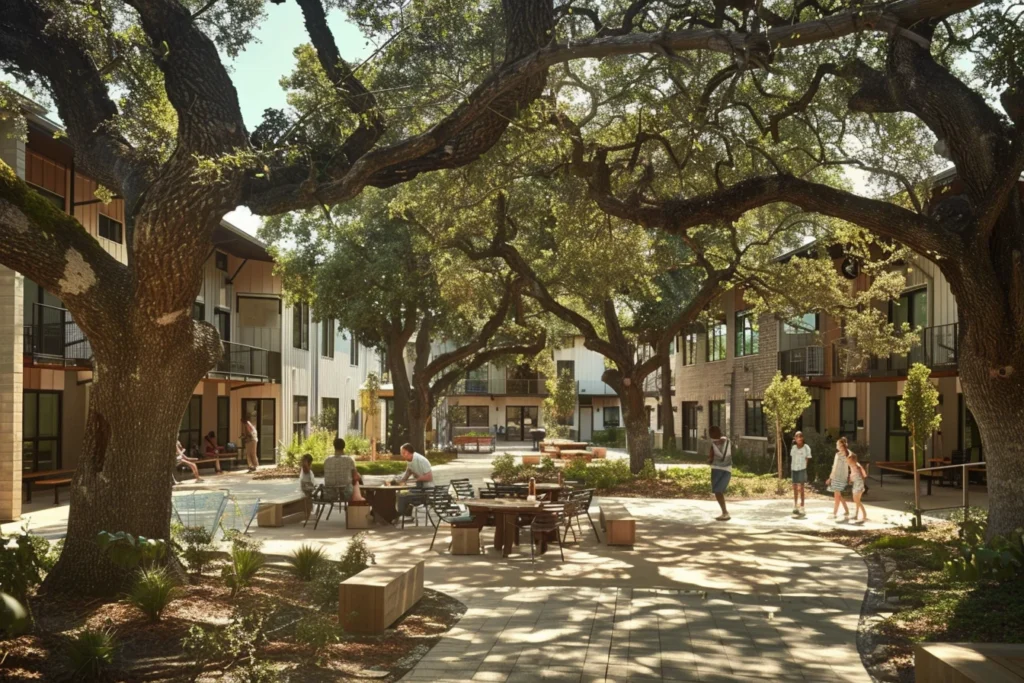
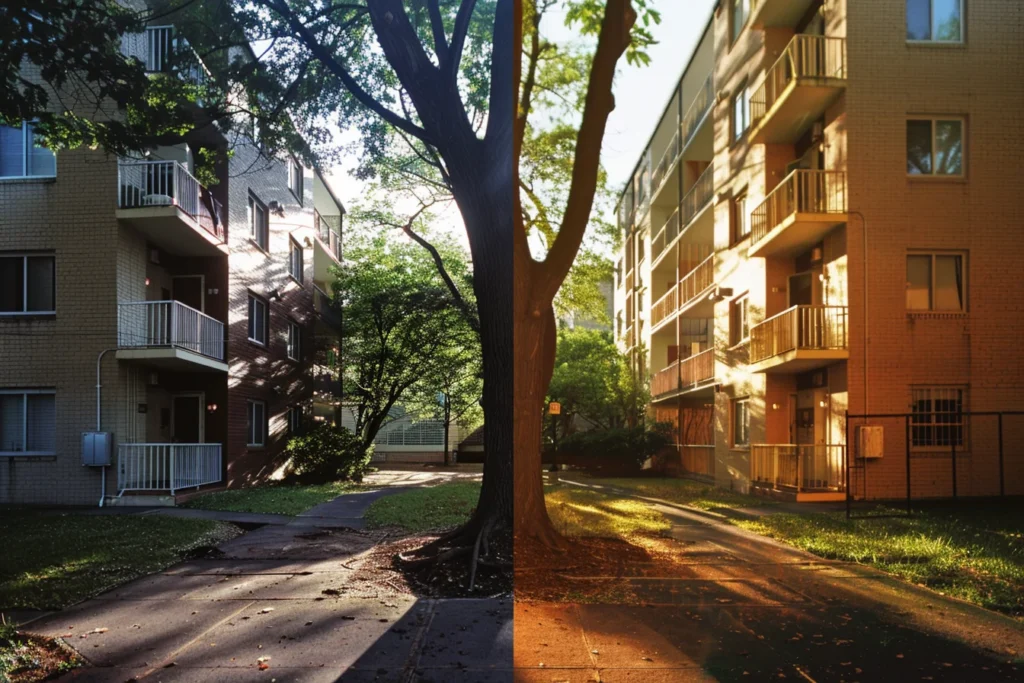
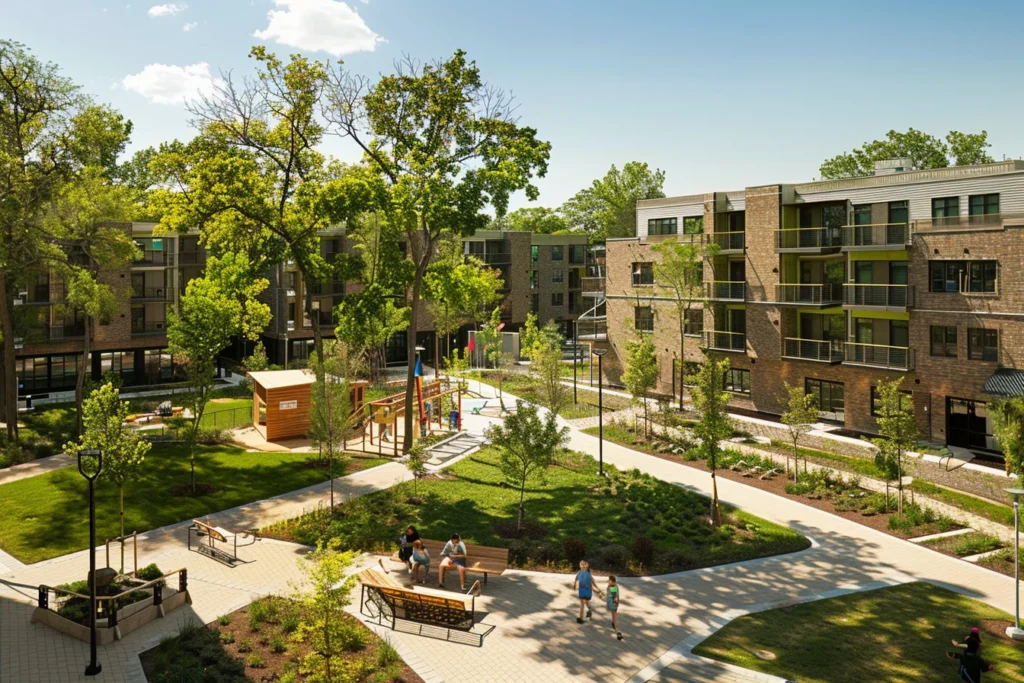
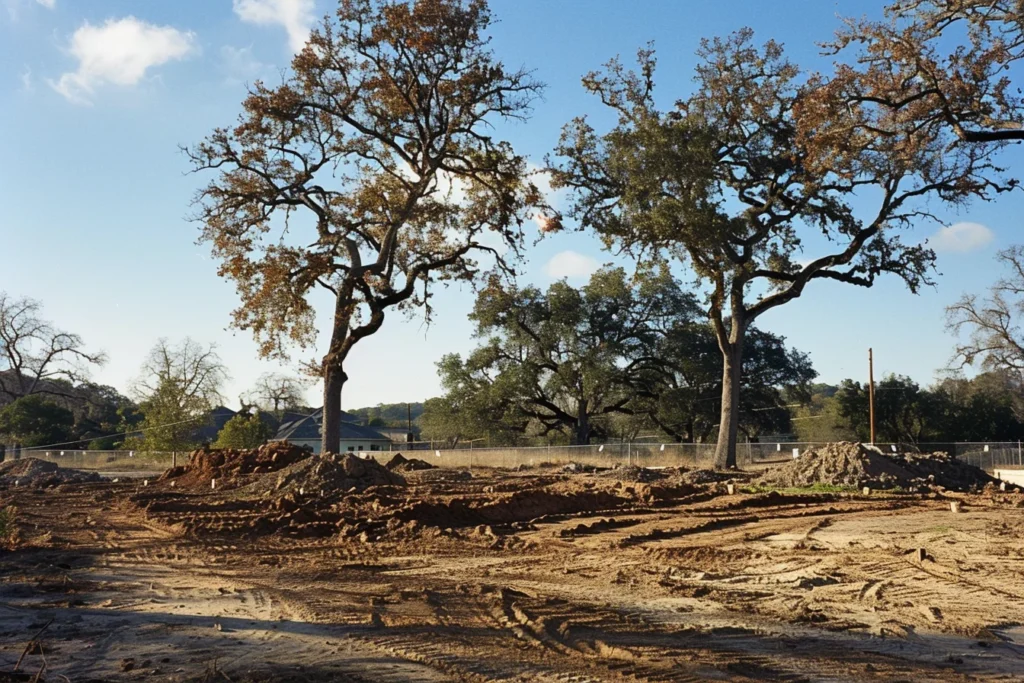
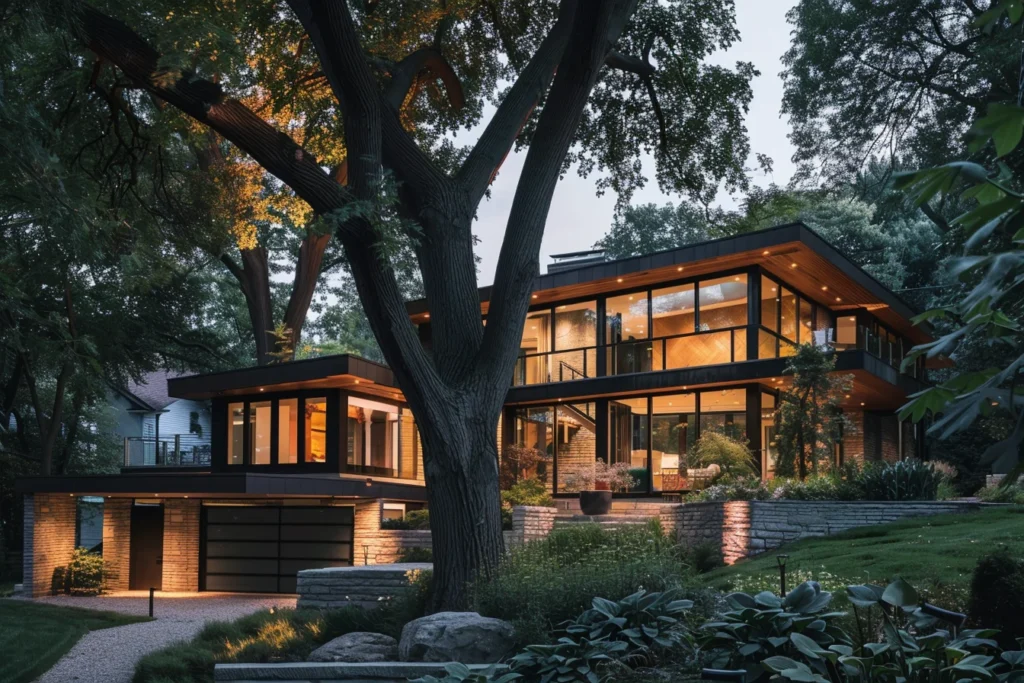
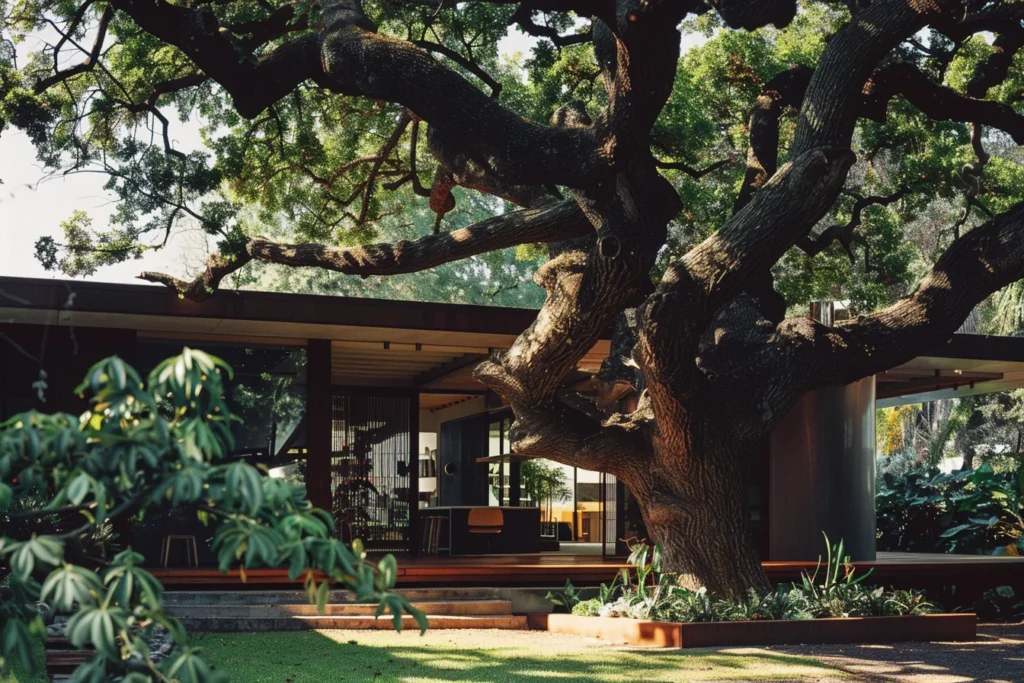
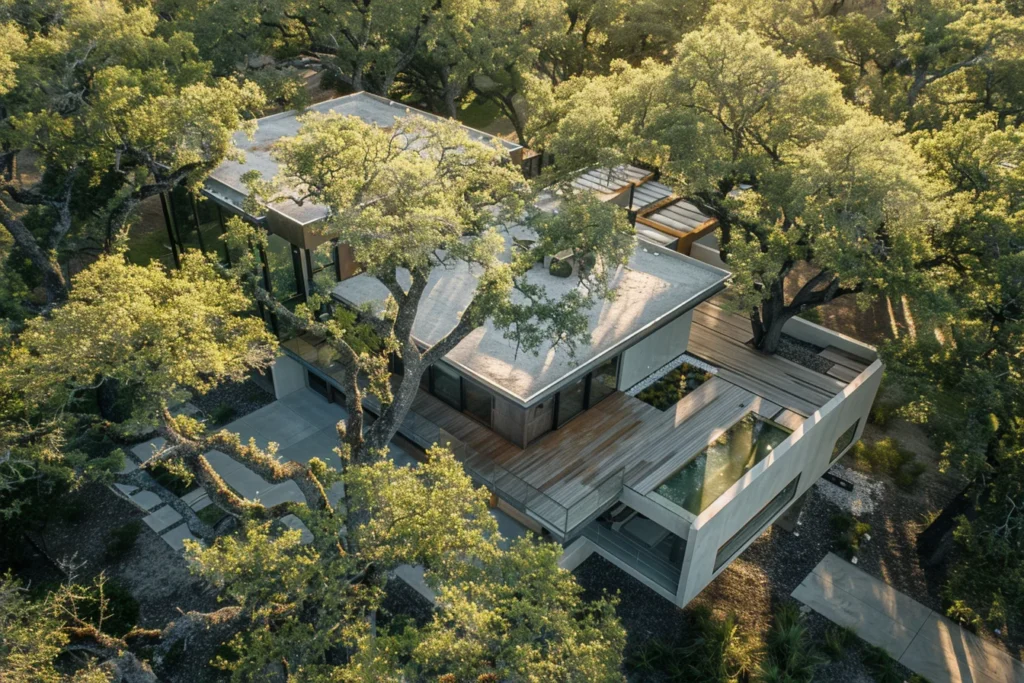
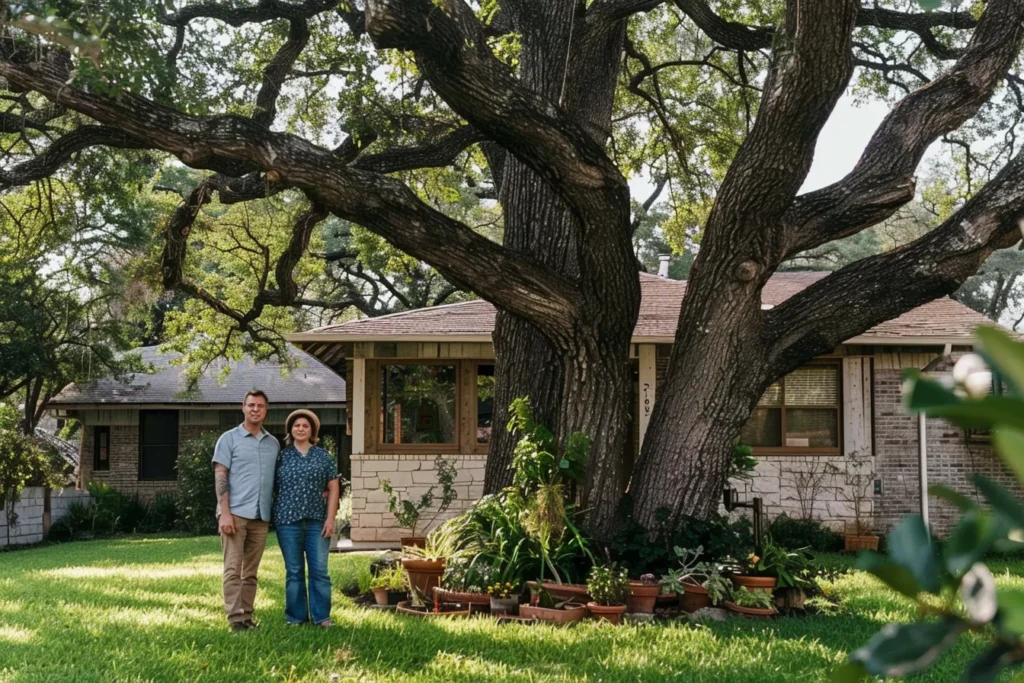
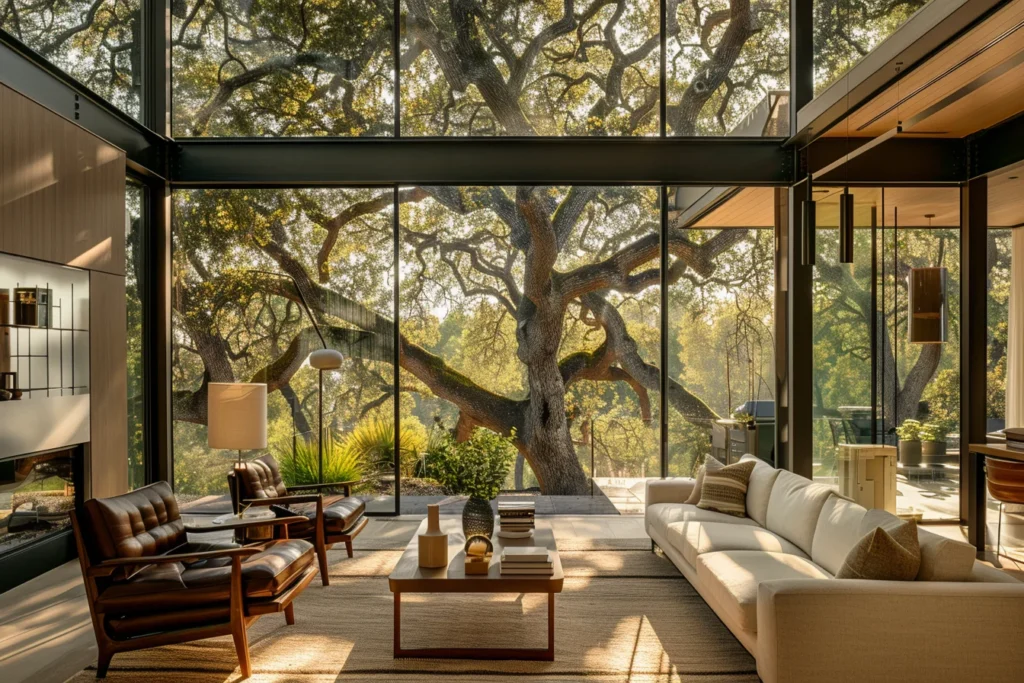
If we can design elevated villas to preserve trees for the wealthy, why not homes for everyone else?
The question sounds rhetorical. The answer is supposed to be “cost.” Affordable housing operates on razor-thin margins. Custom foundations, arborist consultations, site-sensitive design—these sound like luxuries reserved for $2 million hillside retreats.
But what if we’ve been thinking about this backwards?
What if tree preservation isn’t a premium feature to add—but a cost-saving strategy that’s been hiding in plain sight?
Why Trees Matter More in Affordable Housing
The communities that benefit most from mature tree canopy are the ones least likely to have it.
Dr. Sarah Chen, urban health researcher, has documented the disparity: “Low-income neighborhoods average 15-20% less tree cover than affluent areas in the same city. Yet these are precisely the communities experiencing greater heat vulnerability, higher energy burdens, and more limited access to cooling infrastructure.”
The data is stark:
Mature tree shade reduces residential cooling costs by 20-30%
Canopy coverage lowers ambient temperature by 5-10°F
Tree-lined streets show 15% higher property values and faster appreciation
Heat-related illness drops 40% in adequately shaded neighborhoods
A tree preserved is energy equity delivered.
When an affordable housing resident is spending 18% of income on utilities, that 20-30% cooling reduction isn’t aesthetic—it’s survival math.
What It Actually Costs
Here’s the truth about tree-preservation design in affordable housing: the premium is smaller than assumed, and the payback is faster.
Austin Multiplex Case Study:
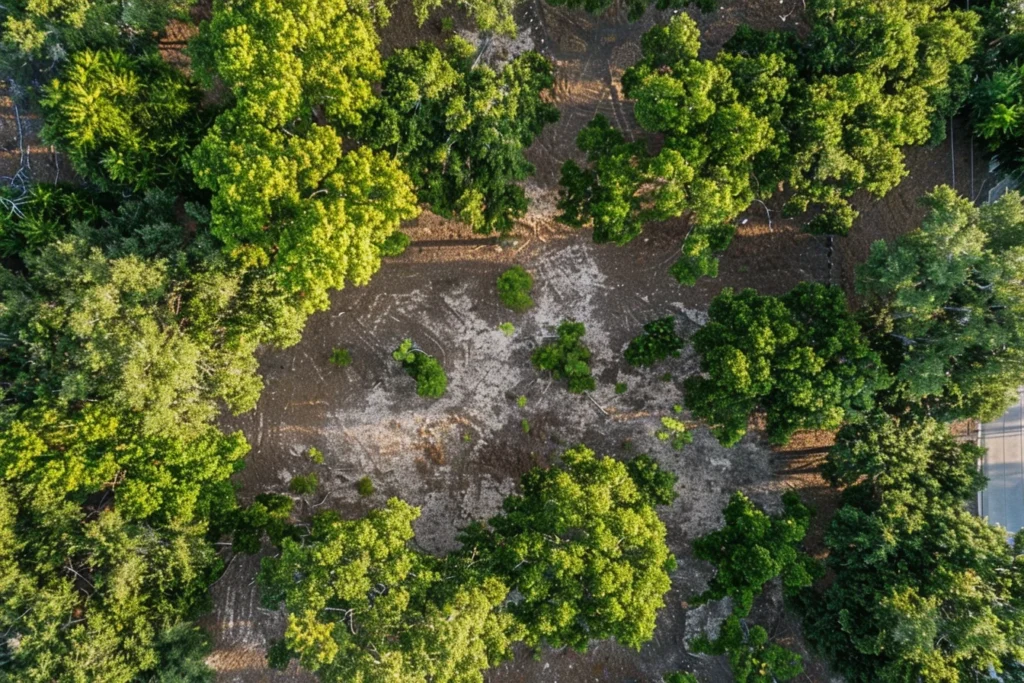
A fourplex development had four heritage live oaks positioned across 40% of the buildable area. Standard approach: clear and build. Alternative approach: design around them.
Cost delta:
Pier-and-beam foundation modifications: +$18,000
Arborist consultation and root mapping: +$2,400
Modified grading plan: +$3,200
Total premium: $23,600 (roughly 4% of total construction cost)
Payback:
Annual HVAC savings (all units): $6,200
Avoided landscaping/irrigation: $8,500 (one-time)
Financial payback: 3.8 years
Carbon payback: 2.1 years
But here’s what the numbers don’t show: resident feedback consistently mentioned the oaks as the primary reason they felt “lucky” to live there. The trees transformed the development from “affordable housing” to “a place people wanted to stay.”
[IMAGE 3: Before/after site plan showing building footprint designed around preserved trees]
The Design Toolkit (Abbreviated)
The gap between “we can’t afford to preserve trees” and “we can’t afford not to” is often just knowledge—knowing which tactics work at which price points.
Foundation Strategies:
Helical piers: Minimal excavation, thread between root zones (~5-8% premium)
Grade beams: Bridge over root areas without deep digging
Pier-and-beam: Classic approach, higher maintenance but proven
Site Planning:
Map root zones before schematic design (saves redesign costs)
Orient buildings to maximize existing shade on west/south walls
Use permeable pavers under canopy (reduces stormwater infrastructure)
The Decision Framework:
Not every tree is worth preserving at any cost. We use a three-tier triage:
Consider: Medium value, higher cost (10-15% premium)—run the payback math
Replace: Diseased, invasive, or preservation cost >15%
The framework includes carbon calculations, energy modeling, and lifecycle cost analysis—but we’ve found the tipping points are surprisingly consistent across climates and typologies.
What Changes at Scale
Individual projects prove the concept. But systems change happens through policy.
Portland’s approach: Affordable housing developers who preserve mature trees receive:
Expedited permitting (saving 45-60 days)
Reduced impact fees (averaging $8,000 per unit)
Additional height/density allowances in exchange for canopy retention
Result: Tree preservation rates in affordable housing increased from 12% to 47% of eligible projects in three years.
Brooklyn’s innovation: The city created a “Green Canopy Fund” that directly subsidizes the foundation cost premium for affordable housing projects preserving mature trees. Funded through a surcharge on luxury developments that clear sites.
These aren’t charity programs—they’re recognizing that urban tree canopy is public health infrastructure.
The Missing Conversation
Here’s what we’re not discussing enough in affordable housing design:
Thermal equity. We obsess over square footage and unit count, but rarely over how hot those units get in July. A 600 sq ft apartment under a mature oak is more livable than an 800 sq ft unit in full sun.
Longevity. Trees preserved today will still be providing shade, cooling, and value in 50 years. The HVAC unit we’re speccing? Replaced three times in that span.
Dignity. Yes, the carbon math works. Yes, the energy savings are real. But there’s something else: residents in tree-preserved affordable housing report feeling more “at home” and express greater pride in their neighborhood. That’s not quantifiable, but it matters.
Designing Shade as a Social Good
The future of sustainability isn’t about luxury eco-villas that few can afford. It’s about democratizing access to the environmental amenities that should be basic: shade, thermal comfort, connection to living systems.
Preserving trees in affordable housing isn’t charity. It’s not even just good design.
It’s recognizing that the people who can least afford high energy bills deserve the cooling infrastructure that reduces them.
The tools exist. The economics work. The policy mechanisms are emerging. What’s needed now is a shift in how we frame the question.
Not: “Can we afford to preserve these trees?”
But: “Can we afford to cut them down?”
What We’re Working On
We’re developing a comprehensive Affordable Tree-Preservation Toolkit that includes:
Cost estimation models for different foundation strategies
Energy payback calculators specific to affordable housing metrics
Root zone mapping protocols that don’t require expensive arborist surveys
Policy templates cities can adapt for preservation incentives
Case study library with complete financial breakdowns
The challenge: Every climate zone, soil type, and tree species combination creates different variables. Cookie-cutter solutions don’t work.
What we need: More projects. More data. More developers willing to try the approach and share results.
If you’re working on affordable housing and want to explore tree-preservation design for your project, we’d love to talk. We’re especially interested in:
Projects in climate zones we haven’t documented yet
Novel foundation approaches that reduce the cost premium
Policy innovations your city is considering
Failed attempts (we learn as much from what didn’t work)
Get in Touch
Considering tree preservation for your affordable housing project?
Contact us to discuss:
Site-specific feasibility assessment
Cost-benefit analysis for your context
Foundation strategy recommendations
Policy navigation and incentive applications
Researching this topic for policy or academic work?
We’re building a collaborative database of tree-preservation outcomes in affordable housing. Data sharing partnerships welcome.
A data-driven guide to preserving mature trees in development projects
The False Economy of the Chainsaw
“It’s faster. It’s cheaper. It’s what everyone does.”
Stand on any pre-development site with mature trees, and you’ll hear this refrain from contractors, project managers, and budget-conscious developers. A sixty-year-old oak stands directly where the foundation needs to go. The chainsaw solves the problem in an afternoon. The stump grinder follows the next day. By week’s end, the lot is clear, level, and ready for concrete.
We’ve all heard the justification. We’ve probably made it ourselves.
But is cutting down that 60-year-old oak actually cheaper in the long run?
The answer, increasingly backed by hard numbers, is no. Trees aren’t just landscape features or aesthetic amenities. They’re living carbon banks, thermal management systems, and property value enhancers with quantifiable returns. Removing them has real consequences—consequences that can be translated into dollars, tons of CO₂, and kilowatt-hours.
This isn’t about sentimentality. This is about math.
The Hidden Math of a Tree
Let’s start with what a mature tree actually does, measured in units that matter to development budgets.
The Carbon Bank Account
A mature oak tree—let’s say 60 years old, with a trunk diameter of 24 inches—sequesters approximately 48 pounds of CO₂ per year. Over its lifetime, that single tree has already absorbed roughly 2,880 pounds of carbon dioxide. That’s equivalent to removing a small car from the road for five years.
But species matter. Here’s what the data shows:
Oak (mature): 48 lbs CO₂/year
Sycamore: 42 lbs CO₂/year
Pine: 35 lbs CO₂/year
Maple: 40 lbs CO₂/year
Now compare that to the replacement narrative. When we cut down a mature tree and plant a sapling, we’re not making an even trade. That new tree won’t match the carbon sequestration rate of its predecessor for decades. A five-year-old oak sapling captures roughly 5 pounds of CO₂ per year—about 10% of the mature tree’s capacity.
The embodied carbon deficit: Cutting down a 60-year-old oak and replanting creates a carbon gap that won’t close for 50-60 years. In carbon accounting terms, you’ve just withdrawn from an account that took six decades to build.
[SIDEBAR A – TABLE: “Average CO₂ Absorbed by Common Urban Trees”]
Species | Mature (40+ years) | Young (5-15 years)
Oak | 48 lbs/year | 5-12 lbs/year
Sycamore | 42 lbs/year | 6-10 lbs/year
Pine | 35 lbs/year | 4-8 lbs/year
Maple | 40 lbs/year | 5-11 lbs/year
Sweetgum | 38 lbs/year | 6-10 lbs/year
The Cost Side of the Equation
“But preserving trees costs more upfront.”
This is true. Designing around mature trees requires additional engineering, thoughtful foundation work, and construction sequencing that respects root zones. It’s not the default approach, which means it takes more time and expertise.
But let’s run the numbers on what “more expensive” actually means.
Real Cost Comparison: Two Oaks and a Foundation
Consider a residential project in Austin, Texas. The site had two mature live oaks, each approximately 70 years old, positioned near the planned foundation corners. The developer had two options:
Option A: Clear and build (the default)
Tree removal: $2,400
Stump grinding: $800
New landscaping (immediate): $18,000
New irrigation system: $6,500
Five years of establishment care: $4,000
Total: $31,700
Option B: Preserve and adapt
Arborist consultation: $1,200
Root zone mapping: $2,500
Custom pier-and-beam foundation design: $12,000
Construction monitoring: $3,800
Root protection barriers: $2,200
Modified grading plan: $3,300
Total: $25,000
The preservation approach was $6,700 cheaper before accounting for any energy or carbon benefits.
But the real kicker? Over the next ten years, those preserved trees delivered an estimated $12,000 in reduced cooling costs. The property also sold 18% faster than comparable treeless lots in the same development, with a 7% price premium.
“You can’t replant a 100-year-old microclimate.” — Sarah Chen, landscape architect and arborist
Amortizing the Premium
Even in cases where preservation genuinely costs more upfront, the payback period is remarkably short. A $15,000 premium for foundation modifications, when amortized over 10 years at 5% interest, costs approximately $1,590 per year. If those preserved trees reduce HVAC costs by just $1,000 annually and add $10,000 to resale value, the investment breaks even in under three years.
The Carbon Accounting Perspective
To truly understand what we’re trading when we cut down a tree, I spoke with three professionals who deal with the intersection of construction and ecology daily.
The Arborist: Physiological Value
Mario Rodriguez, certified arborist with 22 years of experience, explained what happens when a mature canopy tree is removed: “People think of trees as individual organisms, but a 60-year-old oak is an entire ecosystem. The root system extends 2-3 times the width of the canopy. The shade structure affects ground temperature, soil moisture, and understory plants. The bark hosts beneficial insects and microbes. When you remove that tree, you’re not removing one thing—you’re removing a system that took decades to establish.”
He continued: “A young replacement tree won’t replicate those functions for 30-40 years minimum. In carbon terms alone, you’re looking at a multi-decade deficit. But you’ve also lost the cooling effect, the stormwater management, the wildlife habitat, and the air quality improvements that mature tree provides today.”
The Structural Engineer: What It Really Takes
David Park, PE, specializes in foundation systems that work with existing trees: “The industry defaults to ‘clear and build’ because it’s simpler on paper. But once you learn the techniques, designing around trees isn’t that complicated. We use pier-and-beam systems, helical piles, or grade beams that bridge over root zones. The key is getting an arborist involved early to map the critical root zones.”
Park shared a surprising insight: “In clay soils—common in much of Texas and the Southeast—preserving large trees can actually reduce foundation problems. Mature trees stabilize soil moisture, which prevents the expansion-contraction cycles that crack slabs. I’ve seen cases where removing trees led to $40,000 in foundation repairs within five years.”
The Carbon Accountant: Embodied Carbon in the Alternative
James Liu, environmental consultant specializing in construction carbon accounting, helps developers understand the full carbon footprint of building decisions: “When you cut down a mature tree, you’re not just losing its future carbon sequestration. You’re triggering a cascade of embodied carbon. The chainsaw runs on gasoline. The stump grinder too. You bring in fill dirt—that’s hauling trucks, diesel emissions. You pour extra concrete for a conventional foundation—cement is roughly 8% of global CO₂ emissions. Then you plant replacement trees, which require nursery inputs, transportation, and years of irrigation.”
Liu walked me through a simplified equation:
CO₂ Payback Calculation:
$$\text{CO₂ Payback (years)} = \frac{\text{CO₂ saved by tree preservation (lbs)}}{\text{CO₂ emitted by alternative approach (lbs)}}$$
Example scenario:
Preserving two mature oaks (combined sequestration: 96 lbs CO₂/year)
Alternative: Remove trees, pour 4 extra cubic yards of concrete, plant two saplings
Extra concrete embodied carbon: ~800 lbs CO₂
Tree removal/processing emissions: ~150 lbs CO₂
Replacement trees sequestration: 10 lbs CO₂/year (combined)
Net annual benefit of preservation: 86 lbs CO₂/year
Payback period: ~11 years for embodied carbon, then net positive annually
“What people miss,” Liu explained, “is that the carbon math flips dramatically in years 3-5. The preserved tree keeps sequestering at full capacity while the alternative scenario is still in carbon debt.”
The Cooling Dividend
Beyond carbon, mature trees deliver something immediately tangible to building occupants: thermal comfort.
Quantifying the Shade Effect
Research from the University of Georgia and USDA Forest Service has documented what anyone standing under an oak tree in July instinctively knows: tree shade dramatically reduces heat. But the effect is more profound than most realize.
A mature tree canopy can:
Reduce surface temperatures by 20-45°F compared to unshaded areas
Lower ambient air temperature in the immediate vicinity by 5-10°F through evapotranspiration
Decrease building cooling loads by 15-30% depending on tree placement relative to windows and walls
In hot climates, this isn’t trivial. Let’s model a typical scenario:
Cooling Load Calculation: Austin, Texas
2,200 sq ft home, conventionally insulated
Without tree shade: Annual cooling cost ~$1,800
With mature tree shade on south/west sides: Annual cooling cost ~$1,250
Annual savings: $550
Over a 30-year mortgage, that’s $16,500 in cumulative savings—before accounting for energy price inflation.
[IMAGE 8: Graph showing “Cooling Cost Comparison Over 30 Years” – two lines diverging, labeled “With Preserved Trees” and “Without Trees”]
The Urban Heat Island Effect
The cooling benefit scales beyond individual properties. Cities with mature tree canopy see measurable reductions in urban heat island effects. A 2023 study of Atlanta neighborhoods found that areas with 40%+ tree cover averaged 8°F cooler during summer heat waves than areas with less than 10% cover.
For developers working on multi-unit or mixed-use projects, preserving existing trees isn’t just about individual property benefits—it’s about contributing to (or degrading) neighborhood livability.
Property Value Uplift
The market has spoken: people value trees.
A 2024 analysis of residential sales in Portland, Oregon, found that homes with mature street trees and preserved specimen trees on-lot sold for an average of 7-12% more than comparable homes without significant tree cover. They also sold 15% faster.
In dollar terms, for a $500,000 home, that’s $35,000-$60,000 in added value—far exceeding the typical cost premium for preservation-focused design.
[SIDEBAR B – EXPERT QUOTES]
“The physiological value of a mature canopy can’t be replicated by saplings for decades. You’re removing a system, not just a tree.” — Maria Rodriguez, Certified Arborist
“In clay soils, preserving large trees can prevent the foundation problems that develop when tree roots are removed.” — David Park, PE, Structural Engineer
“The carbon math flips dramatically in years 3-5. The preserved tree is generating ongoing benefits while the alternative is still in debt.” — James Liu, Environmental Consultant
The Tree Payback Calculator
Theory is useful. Calculations for your specific project are better.
That’s why we’ve built a simple tool to help architects, developers, and property owners evaluate the financial and environmental case for tree preservation in their projects.
How the Calculator Works
Inputs:
Number of mature trees on site (by species)
Estimated construction cost increase for preservation design
Your climate zone (heating degree days + cooling degree days)
Local electricity rates
Project timeline
Outputs:
Carbon payback period (years until preservation approach becomes net carbon positive)
Financial payback period (years until energy savings exceed upfront costs)
30-year net present value comparison
Estimated property value impact
Total CO₂ equivalence (translated to “cars off the road” or “transatlantic flights avoided”)
Technical Note
The calculator uses USDA Forest Service i-Tree methodology for carbon sequestration calculations, Department of Energy building simulation models for cooling load estimates, and local utility rate databases. It can be embedded directly in project proposals or used during feasibility discussions.
Try the calculator: [TreePaybackCalculator.com]
The tool is free, requires no registration, and generates a downloadable PDF summary you can include in design documentation or stakeholder presentations.
Case Study: The Oak That Paid for Itself
Sometimes the best argument is a real example.
Background: An Urban Infill in Chapel Hill, North Carolina
Site: 0.4-acre residential lot in an established neighborhood Challenge: Three mature oaks (estimated 80-100 years old) positioned across 60% of the buildable area Client: Young family seeking modern, energy-efficient home Initial recommendation from general contractor: Clear all trees, pour slab foundation, plant new landscaping
The Design Pivot
Architect Linda Hartwell proposed an alternative: redesign the home to wrap around the trees.
“The initial plan was a simple rectangle,” Hartwell explained. “But these oaks had 40-50 foot canopies. They were magnificent. I sketched an L-shaped footprint that preserved all three trees and actually used them as outdoor room definition. The living spaces opened directly into the shade canopies.”
The revised approach required:
Pier-and-beam foundation with strategic pier placement outside root zones
Modified HVAC design (smaller unit, ductless mini-splits in two zones)
Careful construction sequencing with 6-foot root protection fencing
Additional upfront cost: $28,000
The Five-Year Payback
Five years after completion, the project economics tell a compelling story:
Energy Performance:
Predicted annual cooling load: 18,000 kWh (based on regional averages for similar square footage)
Actual annual cooling load: 11,200 kWh
Annual energy savings: $890 (at $0.13/kWh)
Five-year cumulative savings: $4,450
Property Value:
Home appraised $52,000 higher than projected value without trees
Sold after five years for $587,000 vs. neighborhood median of $535,000 for similar size/age homes without significant tree cover
Premium attributed to tree integration: 9.7%
Carbon Accounting:
Three preserved oaks sequester ~140 lbs CO₂/year (combined)
Avoided embodied carbon from conventional foundation: ~1,200 lbs CO₂
Carbon payback period: 4.2 years
Ongoing annual carbon benefit: 140 lbs CO₂
Financial Summary:
Extra upfront investment: $28,000
Five-year energy savings: $4,450
Resale premium: $52,000
Net financial benefit: $28,450
Payback period: Less than 3 years on energy alone; immediate when property value included
The homeowner, Marcus Chen, reflected on the decision: “We didn’t choose the tree-preservation design because we ran the numbers. We chose it because it felt right. But having the numbers validate that choice—and exceed expectations—made us advocates. We tell everyone now: don’t cut down mature trees unless you absolutely have no other option.”
Reframing the Design Conversation
The gap between what we know about tree value and what actually happens in development isn’t primarily technical. It’s conversational.
Most projects default to tree removal not because preservation is impossible, but because the conversation never happens—or happens too late in the process.
How to Start the Preservation Conversation
For Architects and Designers:
Lead with site analysis. Before schematic design, engage an arborist to inventory existing trees and identify high-value specimens. Include this in your Phase 1 deliverables, not as an afterthought.
Present options, not ultimatums. Show the client two or three massing studies: one that preserves maximum trees, one that clears selectively, one that clears entirely. Include preliminary cost estimates for each.
Use the language of ROI, not idealism. Instead of “It would be nice to save these oaks,” try: “Preserving these three oaks adds $18K to foundation costs but delivers $25K in energy savings over 10 years and increases resale value by an estimated $40K.”
Integrate preservation metrics into sustainability documentation. If you’re pursuing LEED, Living Building Challenge, or Passive House certification, preserved mature trees contribute points or credits in multiple categories. Make this explicit.
For Developers and Clients:
Ask the question early. In your first meeting with the design team, specifically ask: “What mature trees are on this site, and what’s the cost-benefit of preserving them?” Don’t wait for the architect to bring it up.
Challenge the “standard practice” assumption. When a contractor says “We need to clear these trees,” ask: “What would it take to not clear them? What’s the premium?” Often, no one has actually calculated it.
Think beyond your ownership timeline. Even if you’re building to sell, the tree-preservation premium often comes back in resale value. If you’re building to hold, the energy savings compound over decades.
Frame it as risk mitigation. In cities with tree preservation ordinances (increasingly common), designing around existing trees can streamline permitting and reduce variance requests.
The RFP Language That Changes Outcomes
Want to ensure your project team seriously considers tree preservation? Include language like this in your RFP or design brief:
“The site includes [number] mature trees, several of which are [species] estimated to be [age] years old. The project team shall conduct a tree inventory and assessment during site analysis and shall present at least two design alternatives: one that maximizes preservation of existing mature trees and one that follows conventional clear-and-build approach. Each alternative shall include preliminary cost estimates, carbon impact analysis, and projected operational energy implications.”
This simple paragraph shifts tree preservation from optional nicety to required analysis.
Q: What if the tree is diseased or structurally unsound? A: Preservation should never compromise safety. An arborist can assess tree health. Diseased trees that pose fall risk should be removed, but often only a portion of the tree needs removal, or treatment can extend the tree’s viable lifespan.
Q: What about root damage during construction? A: This is the primary risk and why arborist consultation is critical. Proper construction technique—root protection zones, hand-digging near roots, avoiding grade changes within drip line—can minimize damage. The key is planning, not prohibition.
Q: Do cities give tax credits for tree preservation? A: Some do. Cities including Atlanta, Austin, Portland, and Seattle offer various incentives ranging from expedited permitting to property tax reductions for developments that preserve mature trees. Check your local tree ordinance.
Q: What if the tree is in the exact center of where the foundation must go? A: Then you likely need to remove it. But “exact center” is rarer than assumed. Often, shifting the building footprint 10-15 feet or rotating the orientation solves the conflict without substantive design compromise.
The New Metric for Responsible Design
We’re in a moment of transition in how we think about land development.
For decades, the default assumption was that development and existing natural systems were fundamentally incompatible. Trees, wetlands, topography—these were obstacles to be overcome. The grading plan was about creating a blank slate.
That paradigm is shifting. It has to.
As climate change makes energy resilience and carbon accounting central to project viability, as buyers and tenants increasingly price in environmental quality, and as regulatory frameworks tighten around tree canopy and stormwater management, the old default becomes untenable.
Preserving mature trees is no longer just an aesthetic preference or an ecological nicety. It’s quantifiable. It’s financially material. It’s a design competency that separates thoughtful development from commodity building.
The math is clear:
A mature oak sequesters 10x more carbon annually than a young replacement
Cooling loads under preserved canopy trees drop 15-30%
Property values increase 7-12% for homes with significant preserved tree cover
Carbon payback periods for preservation-focused design average 3-5 years
Financial payback periods are often even shorter
The tools exist. The methodologies are established. The case studies are proliferating.
What’s needed now is a shift in the conversation—from “Why should we preserve these trees?” to “What would it take to preserve these trees?”
Because here’s the bottom line:
If a 60-year-old oak can repay its preservation cost in under five years—through carbon sequestration, energy savings, and property value—why are we still cutting them down?
Take Action
Try the calculator → Calculate your project’s tree payback at TreePaybackCalculator.com
Share your results → Post your preservation case study with #MathOfTrees
Spread the word → Send this to an architect, developer, or client who needs to see the numbers