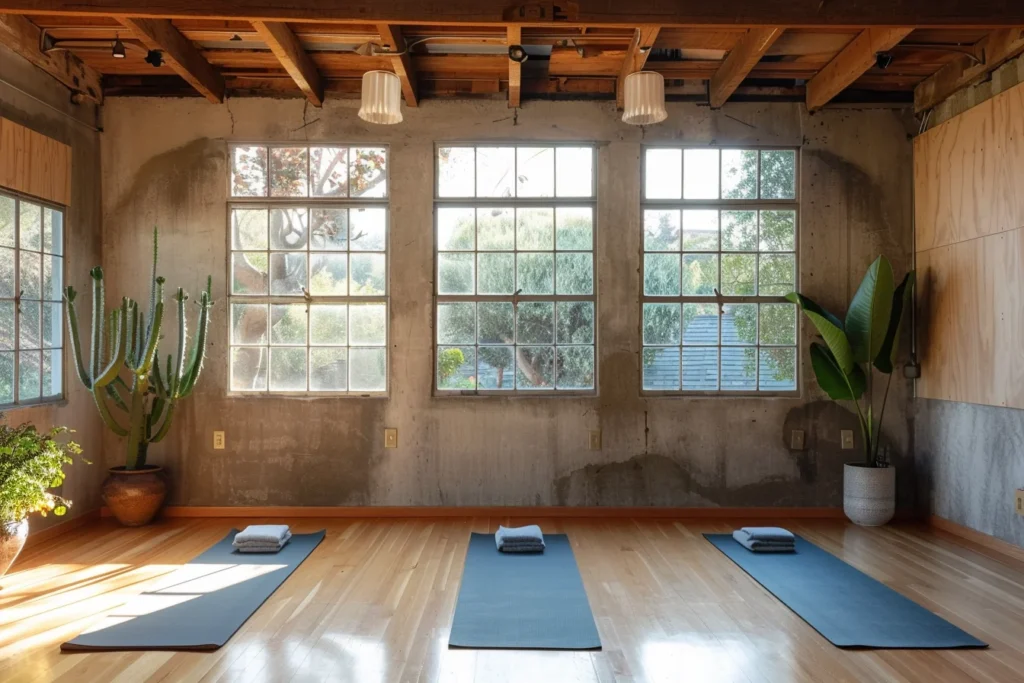
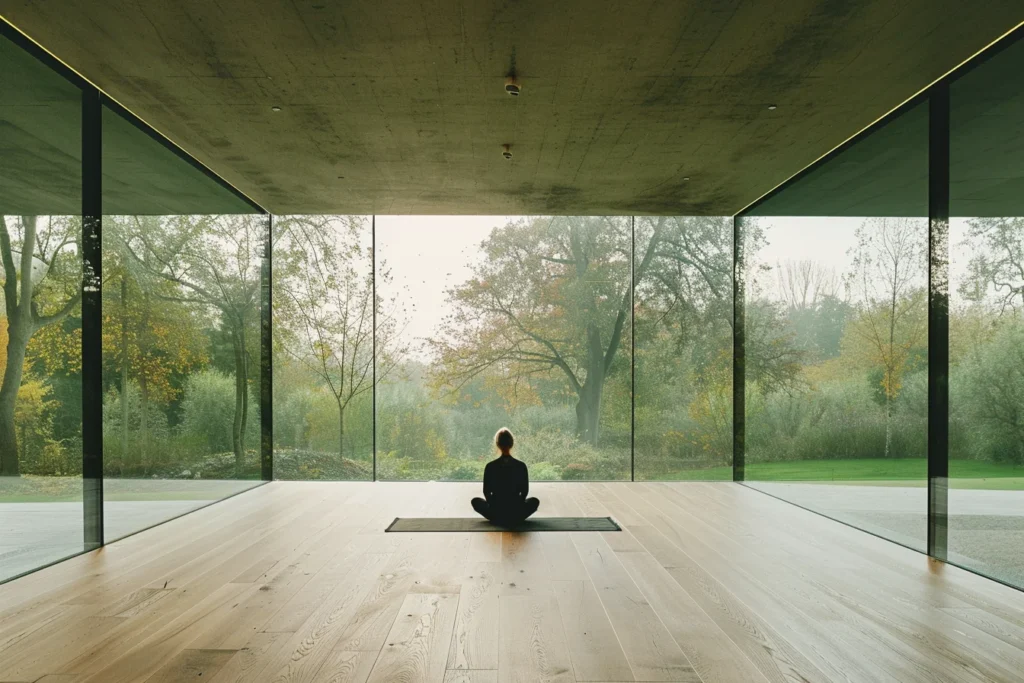
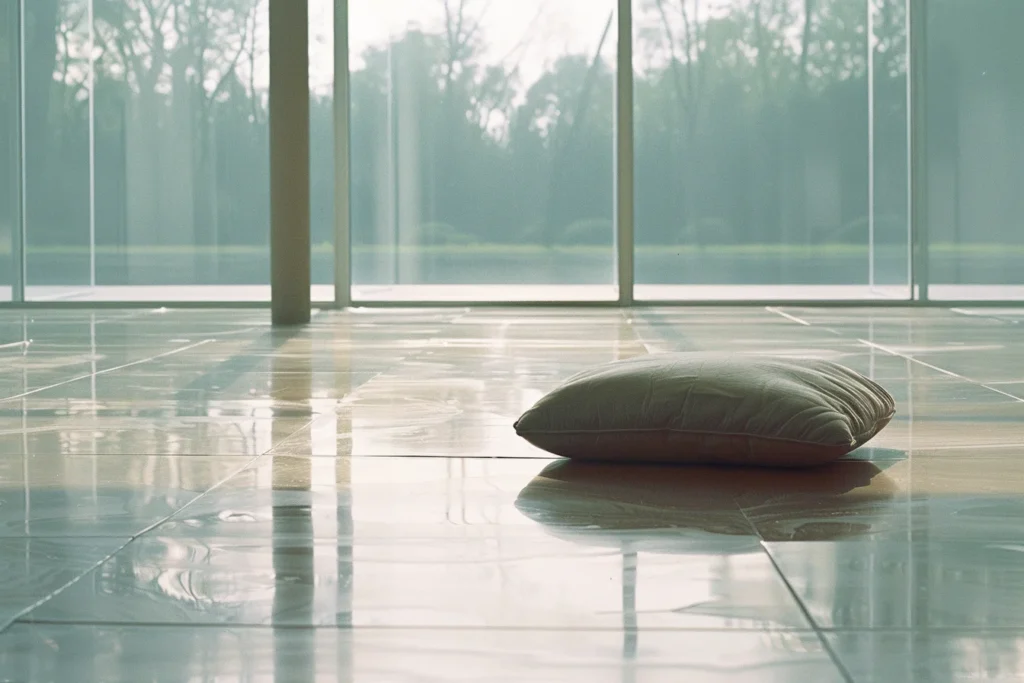
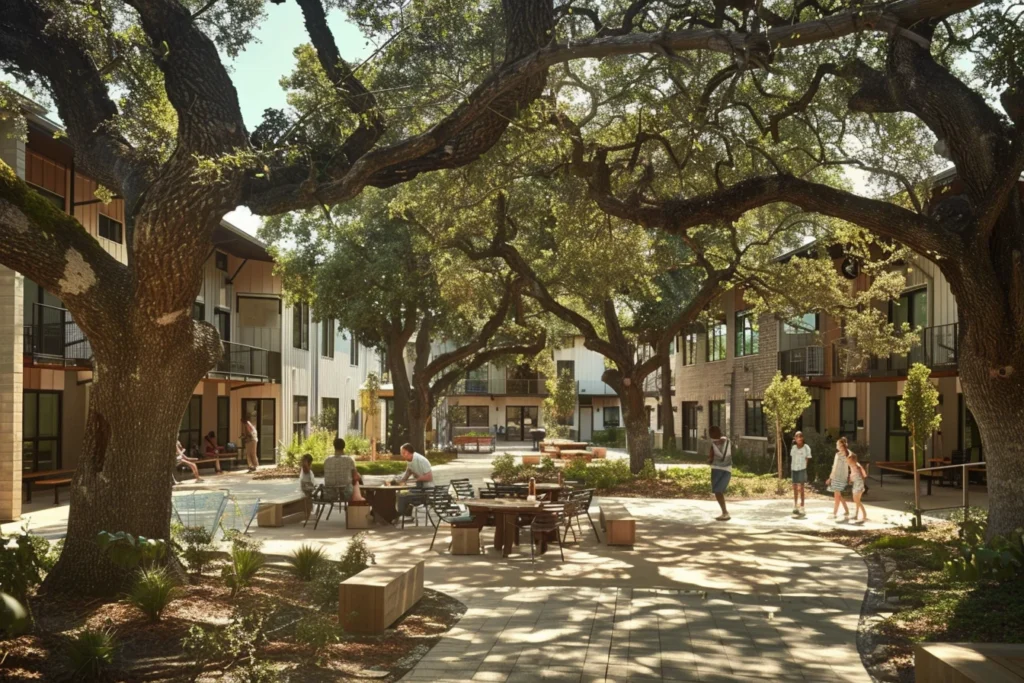
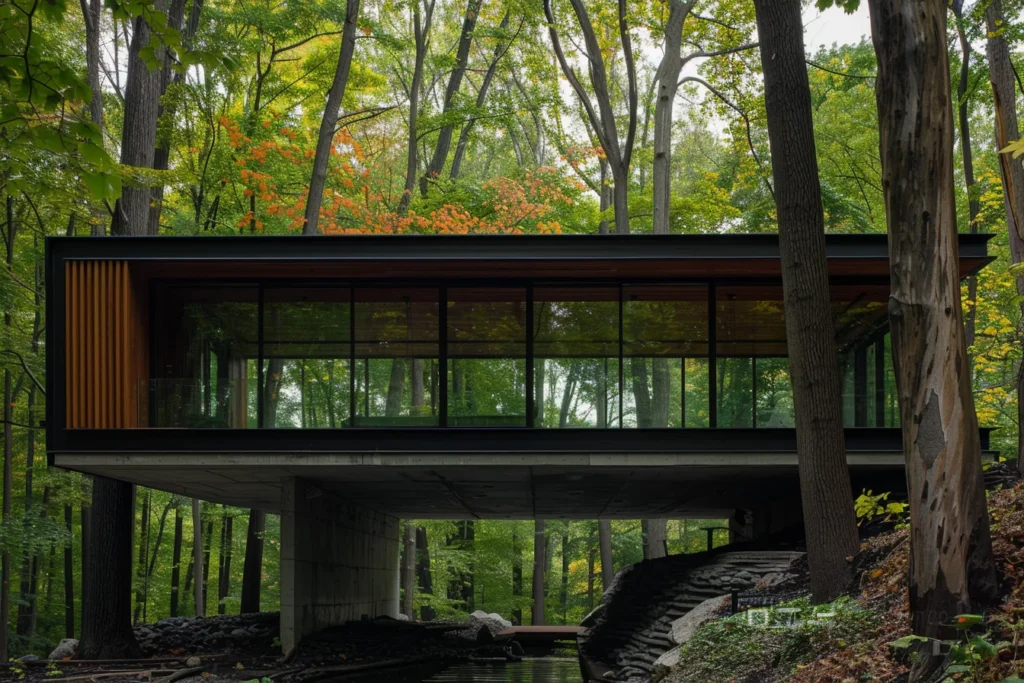
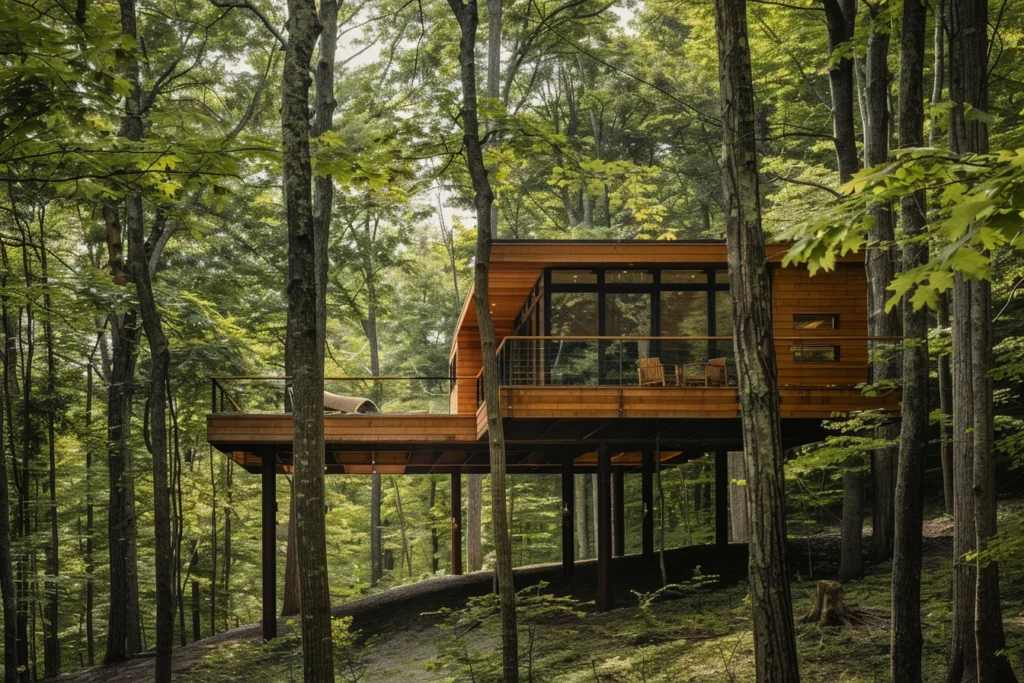
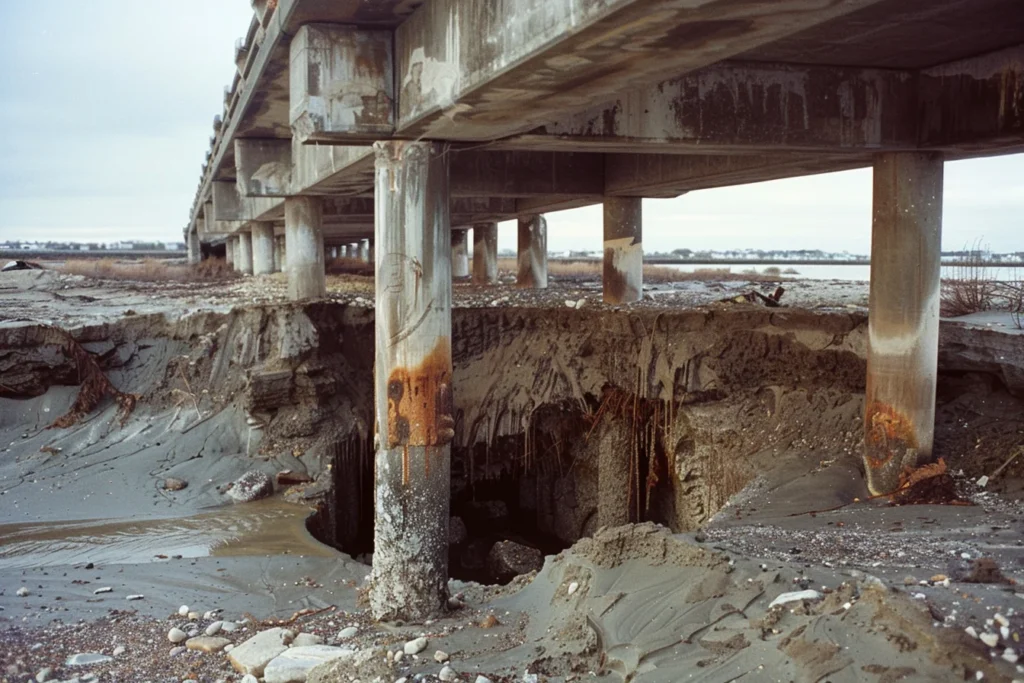
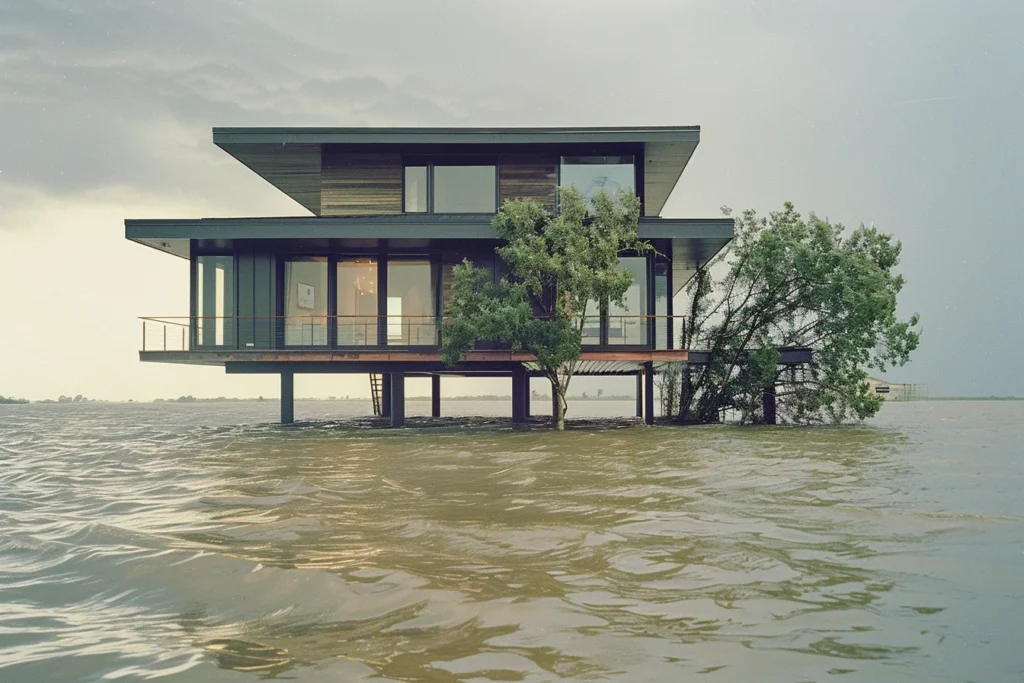
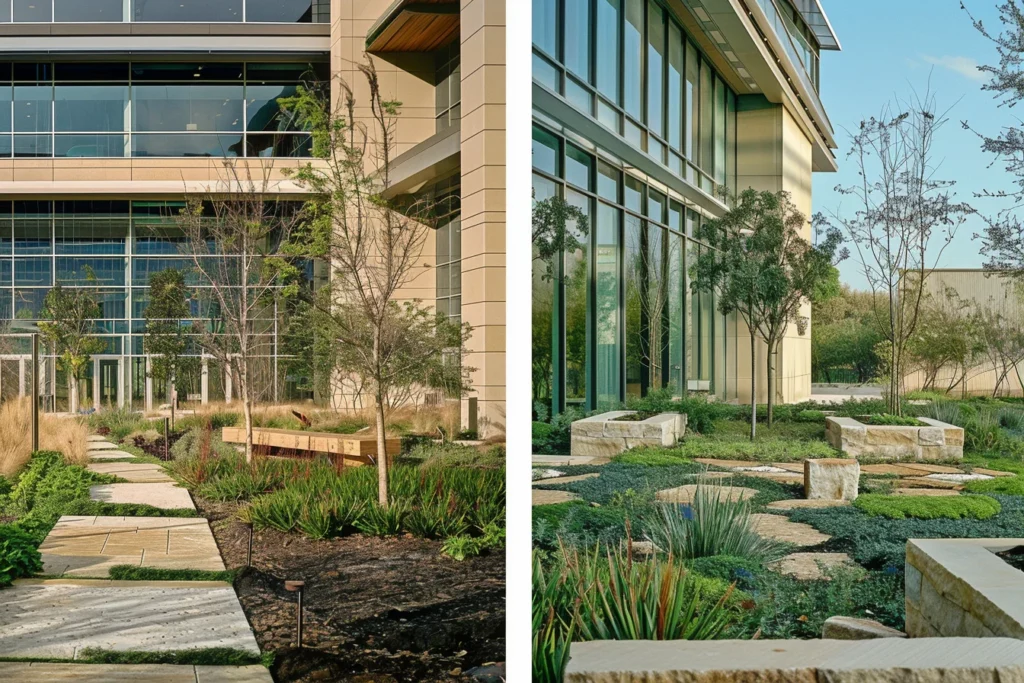
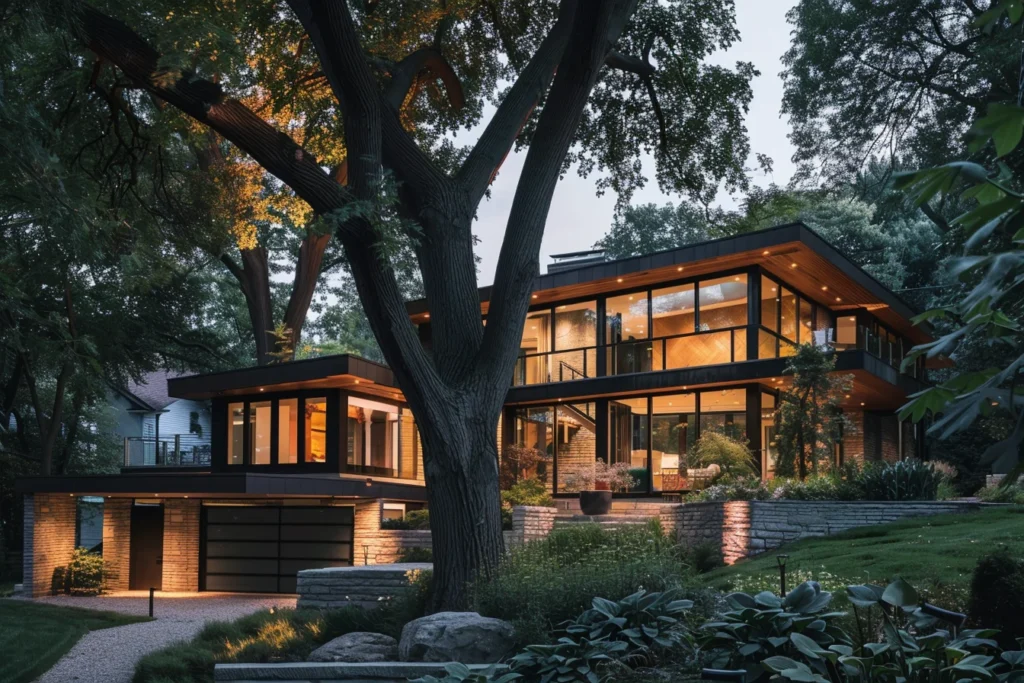
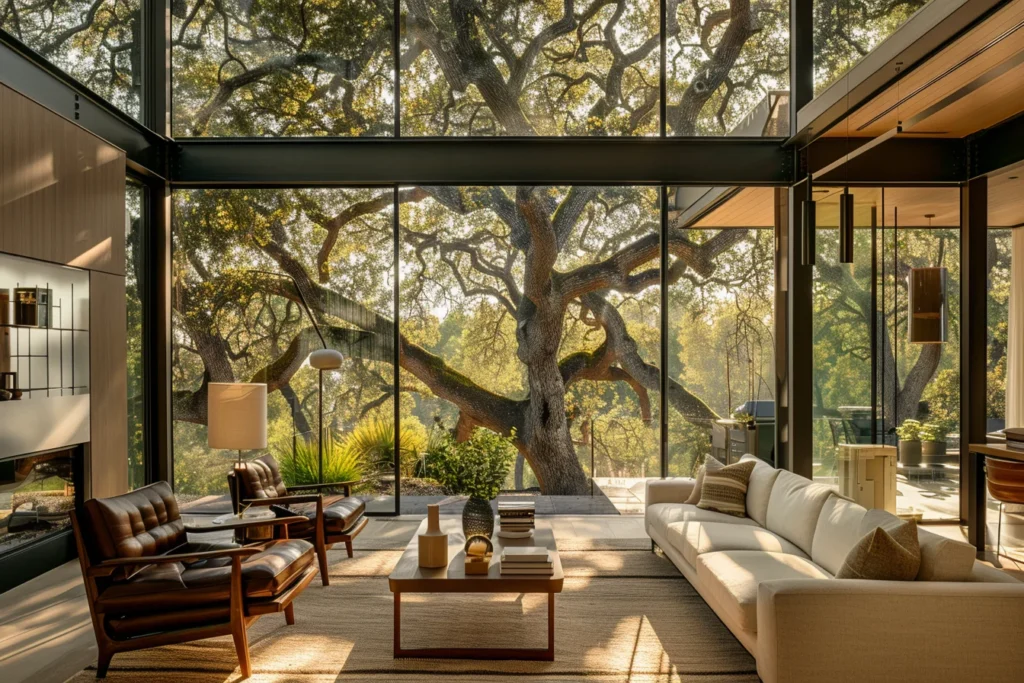
When architecture becomes scaffolding for the forest to come
We’ve learned how to build around trees.
The next challenge is learning how to build for them—designing architecture that anticipates growth, succession, and its own eventual obsolescence.
Preservation is the past tense of sustainability. Regeneration is the future.
From Preservation to Partnership
This series began with the math of not cutting down existing trees. It examined the false economies of elevated structures and luxury wellness pavilions. It explored how affordable housing can adopt preservation tactics.
But what if we stopped thinking defensively—protecting what exists—and started thinking generatively?
What if our buildings weren’t monuments, but mentors for the forests to come?
This isn’t theoretical. A small but growing number of architects are already designing this way.
Global Precedents in Succession Design
Japan: Architecture as Temporary Tenant
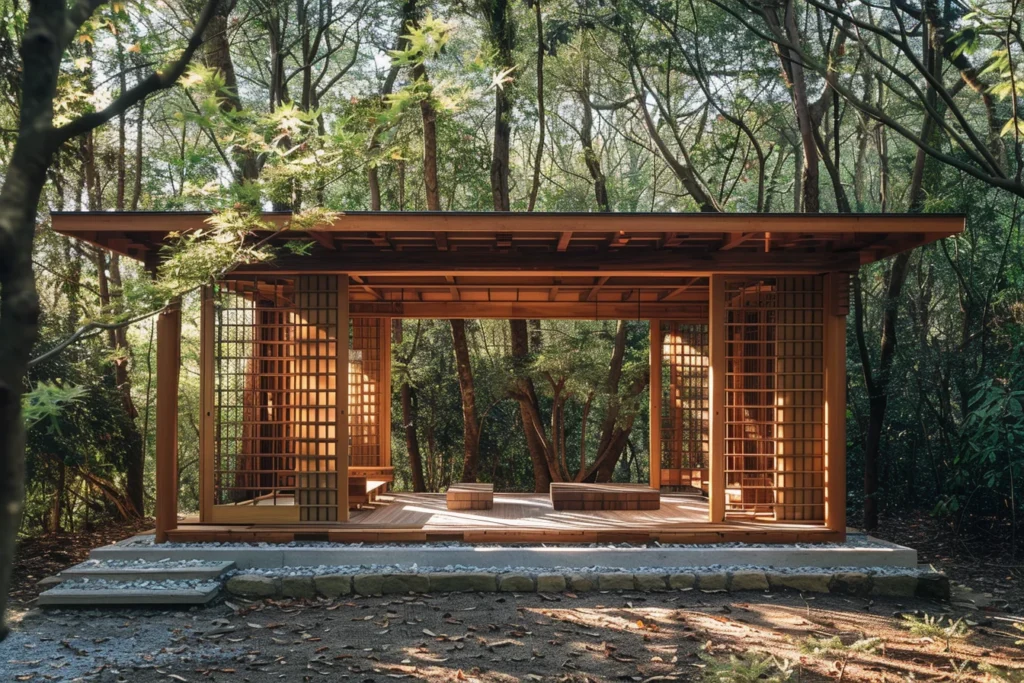
Kengo Kuma’s porous timber structures and Shigeru Ban’s temporary pavilions embody a philosophy where buildings are designed to yield. In Japanese forest-temple traditions, structures are rebuilt every generation—synchronized with forest cycles rather than competing with them.
The building doesn’t outlast the tree. They coexist, and when the tree wins, that’s success.
Scandinavia: Engineering for Root Expansion
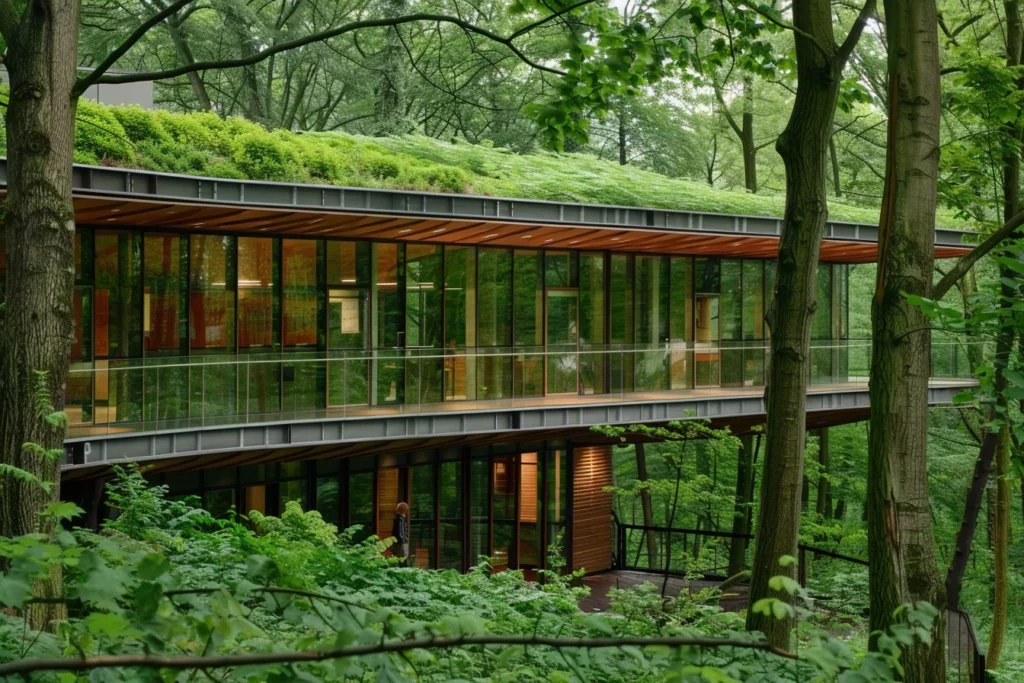
Norwegian woodland cabins are increasingly designed with foundations pre-engineered to accommodate root expansion. Adjustable deck systems allow panels to be removed as saplings mature. The structure adapts rather than conflicts.
Switzerland: Growth Corridors in Urban Blocks
A landscape architecture firm in Zurich is mapping 50-year canopy corridors through residential blocks—reserving voids in hardscape and building foundations for trees that don’t exist yet. The master plan shows not what is, but what will be.
The Mechanics of Designing for What’s Coming
Five principles we’re developing:
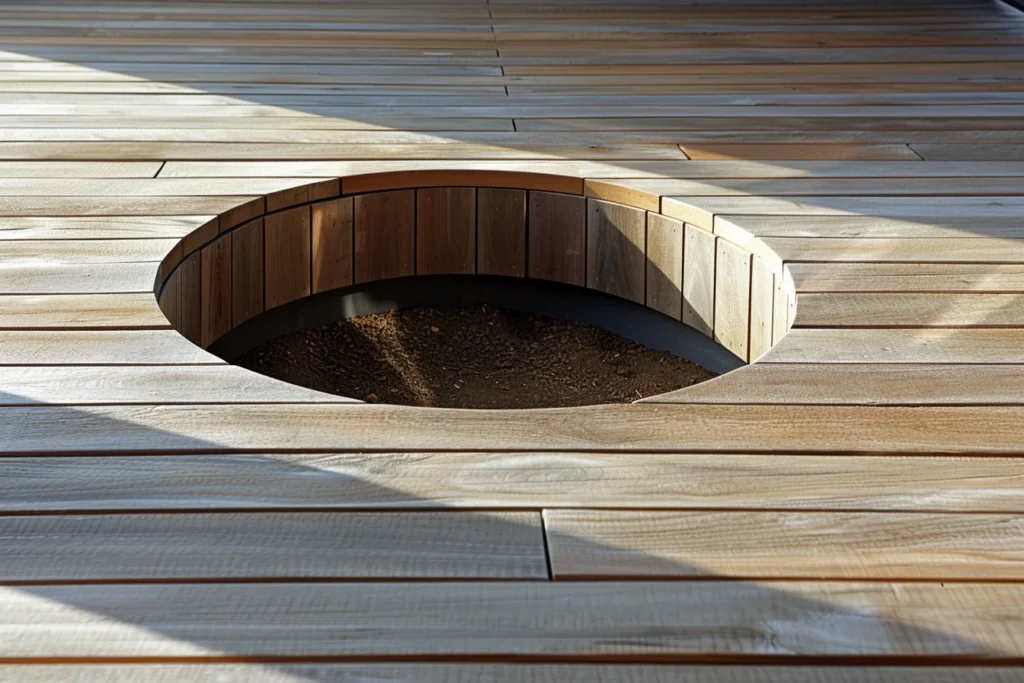
Oversized Openings: Reserve voids in decks and foundations for future saplings (10-20 year horizon)
Adjustable Deck Systems: Modular piers and removable panels that adapt to root expansion (15-40 year horizon)
Degradable Fill Zones: Strategic use of materials that decompose and allow root penetration (20-50 year horizon)
Vegetation Corridors: Long-term canopy planning mapped into site design (50-100 year horizon)
Succession Modeling: Using arborist growth data to simulate future tree positions and design around them preemptively
The technical challenge isn’t the individual tactics—it’s integrating time as a design material.
Design for Succession, Not Permanence
Traditional “design for disassembly” aims for material reuse. Design for succession aims for graceful replacement.
Buildings become scaffolding for ecosystems—to be outgrown, not preserved forever.
A speculative timeline:
Years 0-10: Saplings planted in pre-mapped voids within building footprint
Years 10-40: Structure coexists with maturing canopy, adaptive modifications begin
Years 40-80: Partial disassembly as trees reach full size; rewilding accelerates
Years 80-100+: Forest integrates remnants; building becomes archaeological layer
The carbon math of succession design:
At year 50, a structure designed for succession has:
Avoided 12 tons of embodied carbon (didn’t rebuild when trees grew)
Generated 35 tons of sequestered carbon (mature trees it made space for)
Created thermal and ecological benefits compounding annually
Sustainability isn’t measured in certifications. It’s measured in centuries.
The 100-Year Question
We’re collaborating with ecologists and climate scientists on something we call The 100-Year Atlas—a predictive design tool that:
Models tree growth for major urban species over century timescales
Calculates carbon sequestration vs. embodied carbon in materials
Simulates root expansion and canopy development
Suggests where to “leave space” in current designs
Visualizes what your building could look like when forest overtakes it
The uncomfortable part: It forces designers to imagine their work’s obsolescence.
The liberating part: It redefines success as “how well did you set the forest in motion?”
What We’re Building
The Future Forest Design Atlas is in development—an interactive tool for architects, landscape designers, and planners to:
Input site conditions and design intentions
Model tree species and growth trajectories
See their building at 25, 50, and 100 years
Calculate long-term carbon outcomes
Design adjustable/removable elements for key growth phases
But it’s more than software. It’s a methodology shift.
We’re working with:
Arborists modeling growth patterns for climate-changed futures
Structural engineers designing for intentional obsolescence
Material scientists studying degradable foundations
Philosophers and ethicists exploring architecture’s relationship to time
Indigenous designers whose cultures have practiced this for millennia
The research questions we’re chasing:
What’s the optimal foundation system for 50-year tree coexistence?
How do building codes accommodate structures designed to be overtaken?
What are the insurance and liability frameworks for buildings with planned obsolescence?
How do we value property that’s designed to become forest?
The Ethics of Letting Go
This approach requires confronting architecture’s ego.
We design permanence. We build legacy. We want our work to last.
But what if the highest form of architectural achievement is designing something that gracefully disappears?
“Architecture that anticipates its own obsolescence is the purest form of humility.”
It’s a profound shift: from architect as monument-builder to architect as ecosystem initiator.
Who This Is For
This isn’t for everyone. And that’s fine.
If you’re thinking:
“My clients would never accept a building designed to be temporary”
“Building codes don’t allow this”
“There’s no business model for graceful obsolescence”
You’re probably right. This is frontier territory.
But if you’re asking:
“What if we designed for the century, not the decade?”
“How can my work participate in ecological succession instead of resisting it?”
“What would architecture look like if we accepted impermanence?”
We should talk.
What We’re Looking For
Collaborators in succession design:
Architects willing to prototype adjustable building systems
Developers interested in long-term ecological value propositions
Cities exploring policy frameworks for regenerative architecture
Material scientists working on degradable structural systems
Anyone designing for timescales beyond their own lifetime
Projects we want to study:
Buildings with removable sections designed for tree growth
Master plans that map century-scale canopy development
Successful examples of intentional architectural obsolescence
Indigenous or traditional practices of building-forest coexistence
Research partnerships:
We’re documenting succession design principles, growth modeling methodologies, and long-term carbon accounting frameworks. If you’re researching:
Time-based design ethics
Ecological succession in built environments
Architecture and deep time
Climate adaptation through regenerative design
Let’s collaborate
Get in Touch
Ready to design beyond your own lifetime?
Contact us to discuss:
The 100-Year Atlas methodology (beta access available)
Succession design principles for your project type
Collaboration on frontier research
Speaking engagements on regenerative time-based design
Want to see your project in 2125?
We’re offering visualization partnerships for projects exploring succession design. We model your building’s century-scale future—including tree growth, material decay, and ecological integration.
“Our role isn’t to finish the landscape—it’s to set it in motion.”
“What if the greatest buildings are the ones that know when to let the forest win?”
When the most sustainable building is the one that never existed
The Beautiful Lie
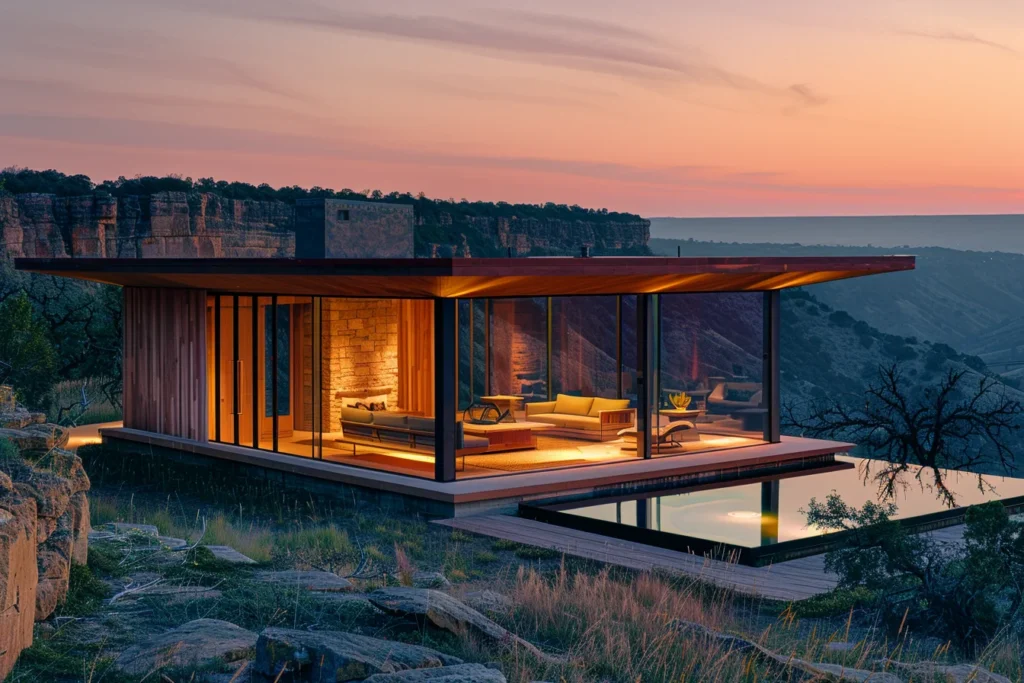
Caption: “Sustainable Wellness Pavilion. 60m² single-use space. 18 cubic meters of milled cedar. 40 tons of concrete piers. 47 tons of embodied CO₂.”
It’s serene. It photographs beautifully. The marketing copy writes itself: A sanctuary for mindful living. A space to reconnect with nature. Sustainably designed for holistic wellness.
The materials are “responsibly sourced.” The energy systems are “efficient.” The design is “site-sensitive.” Every checkbox marked. Every certification pursued. Every Instagram angle optimized.
But let’s ask the question no one wants to answer in the client meeting:
Why does reconnecting with nature require 60 square meters of new construction?
We’ve spent two articles in this series talking about how we build—the math of tree preservation, the realities of elevated structures. We’ve evaluated materials, carbon calculations, and lifecycle costs. We’ve quantified, measured, and optimized.
But we’ve avoided the harder question. The one that makes even well-meaning architects uncomfortable.
What if true sustainability begins not with how we build, but with questioning why we build at all?
This isn’t about materials or methods. It’s about necessity. And in the world of luxury wellness architecture, necessity has left the building.
The Wellness Aesthetic as Green Camouflage
Let’s trace how we arrived here.
The Post-Pandemic Pivot
The wellness architecture boom didn’t emerge from a vacuum. It crystallized in 2020-2022, when affluent clients trapped at home discovered they couldn’t access their usual escape routes—destination spas, retreat centers, yoga studios.
The solution? Bring the retreat home.
What followed was a gold rush of residential wellness construction:
Home yoga studios with “temple-like” qualities
Scandinavian-style saunas nestled in backyards
Meditation pavilions cantilevered over hillsides
Cold plunge pools integrated into “wellness circuits”
Tea houses designed for “mindful contemplation”
Mark Davidson, residential architect in Boulder, Colorado, watched the trend accelerate: “Pre-pandemic, maybe 10% of our high-end residential clients requested dedicated wellness spaces. By 2021, it was 70%. By 2023, it was effectively mandatory for projects over $3 million. The wellness pavilion became what the wine cellar was in 2005—a status marker disguised as lifestyle necessity.”
The Language of Justification
These projects don’t market themselves as indulgences. They’re wrapped in the language of health, healing, and environmental connection.
The architectural statements are remarkably consistent:
“Blurring the boundary between inside and outside”
“Creating space for mindful practice”
“Honoring the natural landscape”
“Sustainable materials in harmony with the site”
“A refuge for holistic wellness”
Dr. Sarah Chen, cultural anthropologist studying luxury consumption patterns: “The wellness pavilion represents a fascinating cultural phenomenon—consumption justified through self-care rhetoric. By framing luxury construction as health infrastructure, clients and architects alike avoid confronting the environmental cost. It’s not excess—it’s wellness. It’s not a want—it’s a need.”
The Paradox at the Core
Here’s what no one says out loud: We’re bulldozing nature to reconnect with nature.
A case study from Marin County, California, illustrates the contradiction:
Project: Private meditation pavilion overlooking coastal hills Site: 0.3 acres of thriving native chaparral (California sagebrush, toyon, coast live oak saplings) Design approach: Clear 80m² for pavilion and access path, install pier foundation, construct cedar and glass structure Budget: $485,000 Stated goal: “Create a sanctuary for nature-based meditation practice”
What was destroyed to create the sanctuary:
47 mature shrubs (average age 15-20 years)
12 oak saplings (8-10 years growth)
Critical habitat for native pollinators
Established soil microbiome
Natural drainage patterns
What was built:
60m² enclosed structure used approximately 90 minutes per week
Climate-controlled interior (defeating the “connection to nature” premise)
Lighting system for evening meditation
Heated floors for winter comfort
The client’s perspective: “We wanted a space to appreciate the landscape without disturbing it.”
The ecological perspective: The undisturbed landscape they wanted to appreciate was the disturbance.
“We’re burning carbon to find our center.” — James Liu, environmental consultant
The Numbers Don’t Lie
Let’s remove the aesthetic veneer and look at the environmental cost.
Embodied Carbon Analysis: The 60m² Wellness Pavilion
Typical specifications for a “modest” luxury wellness space:
Embodied carbon: ~8,500 kg CO₂ Savings vs. new construction: 38,500 kg CO₂ (82% reduction) Cost: $45,000-65,000 vs. $400,000-600,000 Usage impact: Identical functionality
Alternative 2: Attic/Basement Transformation
Embodied carbon: ~6,200 kg CO₂ Savings vs. new construction: 40,800 kg CO₂ (87% reduction)
Alternative 3: Shared Wellness Facility Membership
Approach: Join local yoga studio, meditation center, or wellness cooperative Annual embodied carbon allocation: ~85 kg CO₂ (amortized facility construction divided by members) 10-year carbon footprint: 850 kg CO₂ Savings vs. new construction: 46,150 kg CO₂ (98% reduction) Additional benefits:
Community connection (arguably more aligned with wellness philosophy)
Professional instruction
Varied programming
Zero maintenance burden
What is embodied carbon? The total CO₂ emissions from material extraction, manufacturing, transportation, and construction—everything that happens before the building opens.
Why it matters for small structures: Small buildings have high carbon intensity per square foot because they require foundations, roofs, and systems that don’t scale down proportionally.
Typical embodied carbon for common materials:
Concrete: 350-400 kg CO₂/m³
Steel: 1,850 kg CO₂/ton
Lumber (milled): 180-250 kg CO₂/m³
Glass (low-E): 85-110 kg CO₂/m²
Cedar (premium): 220-280 kg CO₂/m³
Rule of thumb: A small standalone structure (50-100m²) typically generates 400-800 kg CO₂ per m². Converting existing space is usually 80-90% lower.
The Myth of “Personal Sanctuaries”
The marketing narrative around wellness pavilions centers on a seductive idea: authentic wellness requires personal space. Solitude. A sanctuary that’s yours.
But let’s examine what we’re really building—and why.
Status Minimalism
Dr. Rachel Morgan, sociologist studying luxury consumption at Stanford, identified a phenomenon she calls “status minimalism”: “The wealthy perform restraint through carefully curated simplicity—but the performance itself requires vast resources. A $500,000 meditation pavilion with nothing in it except a cushion isn’t actually minimalist. It’s maximalist resource consumption disguised as zen.”
She continued: “The pavilion signals two things simultaneously: ‘I care about wellness’ and ‘I can afford private space for it.’ It’s conspicuous consumption in the language of consciousness. The structure itself becomes the status marker.”
The Performance of Care
Why build a separate structure when existing space could serve the same function?
The honest answer, spoken privately by clients but rarely admitted publicly: Because it photographs better. Because it demonstrates commitment. Because guests will notice.
Linda Hartwell, the architect we’ve quoted in previous articles, reflected on her own complicity: “I’ve designed three wellness pavilions in my career. Beautiful projects. Award submissions. But if I’m honest? Two of those clients used the spaces maybe 50 times in the first year, then rarely after. They became expensive storage for yoga mats. The real function wasn’t practice—it was the ability to tell guests, ‘Oh, that’s our meditation pavilion.’ The building was the wellness signifier, not the wellness enabler.”
Moral Licensing in Design
Environmental psychologists document a phenomenon called “moral licensing”: when people feel virtuous about one choice (using “sustainable materials”), they feel entitled to less sustainable choices elsewhere (building an unnecessary structure).
The wellness pavilion is moral licensing architecturalized.
By checking sustainability boxes—reclaimed wood! solar panels! native landscaping!—clients and architects alike create permission for the fundamental unsustainability: constructing a building that doesn’t need to exist.
Dr. James Whitmore, environmental psychologist: “The question isn’t whether the pavilion is built sustainably. The question is whether building it at all aligns with the values it claims to embody. True mindfulness might mean recognizing that you don’t need it.”
The Alternatives: Radical Common Sense
Let’s be clear: this isn’t an argument against wellness practice. It’s an argument for honesty about what wellness actually requires.
Adaptive Reuse: The Unsexy Solution
Most homes already contain usable space that could serve wellness functions:
Option 1: The Garage
Average 2-car garage: 36-40m²
Perfect dimensions for yoga, meditation, light exercise
Already has electrical, usually has climate control
Conversion cost: 10-15% of new pavilion cost
Embodied carbon: 15-20% of new pavilion
Maria Santos, interior designer specializing in adaptive reuse: “I’ve converted twelve garages into wellness studios. Every single client initially wanted a separate pavilion. Every single one is now grateful they didn’t build it. They actually use these spaces more because they’re convenient—attached to the house, accessible in bad weather, no pilgrimage required.”
Option 2: The Attic/Basement
Often underutilized space with good dimensions
Inherent quietness (separated from main living zones)
Natural temperature regulation (especially basements)
Can be stunning with proper finishing
Option 3: The Master Bedroom Reconfiguration
Modern master suites are often 30-40m²
Could be divided: sleeping zone + wellness zone
No new construction required
Forces actual use (it’s where you already are)
Shared Infrastructure: The Forgotten Solution
Here’s a truth that contradicts the luxury wellness narrative: community spaces are often superior to private ones.
Advantages of shared wellness facilities:
Professional programming: Trained instructors, varied classes, skill development
Community connection: Social wellness, relationship building, accountability
Resource efficiency: Hundreds of people using the same space instead of hundreds of private pavilions
Maintenance: Someone else handles it
Variety: Access to equipment and amenities no home pavilion could match
The carbon math:
Private 60m² pavilion: 47,000 kg CO₂, 1-2 users
Shared 400m² studio: 280,000 kg CO₂, 200 members
Per-person embodied carbon:
Private: 47,000 kg
Shared: 1,400 kg (97% reduction)
counterargument heard from clients: “But I can’t always get to a studio when I want to practice.”
Honest response: How often do you actually practice? If the answer is “not as much as I’d like,” building private space won’t change that. The barrier isn’t access—it’s motivation. Shared space often increases consistency through community accountability.
Outdoor Integration: Maximum Effect, Minimal Material
[SIDEBAR B – 10 Ways to Design for Wellness Without Building Anything]
Garden platform: Simple deck on grade, 4m², minimal foundation
Screened porch conversion: Add screens to existing covered patio
Tree platform: Elevated deck around existing tree using minimal piers
Hardscape meditation circle: Gravel or stone circle in garden
Garden pathway system: Meditative walking path through existing landscape
Membership investment: Put pavilion budget into lifetime studio membership + home retreat weekends
The most sustainable wellness architecture might be a meditation cushion and the discipline to use it.
The Cultural Reckoning
We need to talk about architecture’s complicity in selling eco-aesthetics to the affluent.
How Sustainability Became a Style
Somewhere in the past two decades, sustainability shifted from an ethic to an aesthetic. From a way of thinking to a way of marketing.
You can see it in the language:
“Sustainable luxury”
“Eco-conscious design”
“Green living spaces”
“Environmentally sensitive architecture”
These phrases don’t describe actual environmental performance. They describe a visual style: natural materials, large windows, integration with landscape, minimalist interiors.
The wellness pavilion has become what the infinity pool was in 2005—beautiful, serene, and fundamentally unsustainable.
David Park, the structural engineer we’ve quoted previously: “I’ve worked on $800,000 wellness pavilions where the client insisted on ‘sustainable’ materials while refusing to consider not building at all. The cedar was FSC-certified. The concrete was low-carbon. The glass was high-performance. None of which changes the fact that the most sustainable version was the one that never got built.”
The Conversation We’re Not Having
If wellness requires new construction, is it really wellness—or just consumption with better PR?
This question makes everyone uncomfortable because it implicates:
Clients who want the space (and the status it conveys)
Architects who want the commission (and the portfolio piece)
Publications that feature the work (and need stunning photography)
Manufacturers who supply the materials (and market “sustainable” products)
Everyone has economic incentive to not ask the question.
But the planet doesn’t care about our economic incentives.
Dr. Emma Whitfield, MIT environmental design researcher: “The wellness pavilion represents architecture’s most successful marketing transformation—we’ve convinced clients that environmental luxury is possible, that you can have your 500m² home plus your 60m² wellness pavilion and still consider yourself eco-conscious because you specified reclaimed wood. This is greenwashing at the scale of lifestyle.”
Reframing Luxury
What if we redefined luxury not as acquisition but as restraint?
Quiet Luxury for the Planet
The fashion world has embraced “quiet luxury”—no logos, no ostentation, just impeccable quality and timeless design. Could architecture follow?
Quiet luxury for the planet might mean:
The restraint to not build the wellness pavilion
The confidence to use existing space creatively
The maturity to join a community studio rather than demanding private amenity
The wisdom to invest in experiences and practices rather than structures
Luxury measured not in square footage but in:
Time: Having more of it because you’re not maintaining unnecessary structures
Space: Valuing quality over quantity of space
Stewardship: Leaving land undisturbed as legacy
Authenticity: Aligning actions with stated values
Margaret Soto, sustainable design consultant: “The clients I most respect are the ones who come in wanting a meditation pavilion and leave the process having redesigned their master bedroom instead. They got better outcomes at lower cost with drastically less environmental impact. That takes ego management that most clients—and honestly most architects—aren’t willing to do.”
Architects as Stewards of Enoughness
This reframing requires architects to see themselves differently.
We’re not just service providers executing client wishes. We’re professionals with expertise and ethical obligations. Sometimes the most important thing we can do is say: “Let me show you why you don’t need this.”
Linda Hartwell again: “Early in my career, saying no to a project felt like career suicide. Now, with 25 years of experience, I see it as professional maturity. If I can talk a client out of building something unnecessary, I’ve done better work than if I design them the most beautiful unnecessary building possible.”
She described a recent conversation: “Client wanted a tea house. I showed them three alternatives: convert the garden shed, create a covered platform, join the Japanese tea house downtown that offers classes. They chose the downtown option. I ‘lost’ the commission. But they’re actually practicing tea ceremony now, which they weren’t doing before. And I helped them spend $400,000 on something else—they upgraded their home insulation, installed a heat pump, and put the rest into their kids’ college fund. Better outcomes all around.”
The new measure of success: Projects we helped clients avoid.
The wellness pavilion phenomenon isn’t limited to North America. It’s a global pattern among the affluent:
Aspen, Colorado: Mountain meditation pods with heated floors and 300° views Malibu, California: Cliffside yoga platforms cantilevered over the Pacific Cotswolds, England: “Garden sanctuaries” built from imported Japanese timber Bali, Indonesia: (Ironically) Western clients building “traditional” Balinese pavilions Kyoto, Japan: Ultra-modern tea houses for tourists who want “authentic” experiences Byron Bay, Australia: Eucalyptus-clad wellness studios in bushfire zones
The common thread: extreme privilege packaged as spiritual practice.
These aren’t vernacular structures built from necessity. They’re architectural tourism—borrowing aesthetic signifiers from cultures where such structures emerged from genuine need or tradition, and deploying them as lifestyle accessories.
Conclusion: The Most Sustainable Building Is the One That Never Existed
Let’s return to that glowing cedar pavilion from our opening. The one that looks like sustainability itself.
What if we changed the caption?
“Sustainable Wellness Pavilion. 47 tons CO₂. Used 78 minutes per week. Could have been a garage conversion, a studio membership, or just a corner of a bedroom. But it wouldn’t have photographed as well.”
Uncomfortable? Good.
Wellness isn’t built. It’s felt.
True wellness comes from practices, not structures. From consistency, not construction. From internal work, not external amenities.
If you genuinely can’t find 20 square feet of existing space in your home for a yoga mat, that’s not a space problem—that’s a priorities problem.
And if you genuinely believe you need a separate building to achieve inner peace, perhaps the first practice should be examining that belief.
The most sustainable building is the one that never existed. The most meaningful wellness practice is the one that requires no special architecture at all.
This doesn’t mean we should never build. It means we should build with genuine necessity, not marketed desire. With humility, not performance. With recognition that every structure has a cost, and some costs can’t be offset by “sustainable materials.”
The question isn’t: Can we build this sustainably?
The question is: Should we build this at all?
A Challenge for Architects
Next time a client comes to you wanting a wellness pavilion, try this:
Ask why: What specific need does this space fulfill that existing space cannot?
Show alternatives: Present three options: adaptive reuse, shared facilities, outdoor integration
Calculate honestly: Show real embodied carbon for all options, including the “do nothing” option
Measure success differently: Track whether clients actually achieve their wellness goals, not just whether they have nice spaces
The best commission might be the one you talk your client out of.
A Challenge for Clients
Before you build that wellness pavilion:
Test the premise: Use existing space for your practice for 90 days. Do you actually need more?
Try community: Commit to a studio membership for 6 months. Is private space truly necessary?
Question the narrative: Are you building for practice or for presentation?
Consider legacy: What matters more—a structure or an intact landscape for future generations?
The most luxurious thing you can own might be the space you chose not to build.
“In 2025, the most luxurious thing an architect can do is convince a client not to build.” — Margaret Soto, sustainable design consultant
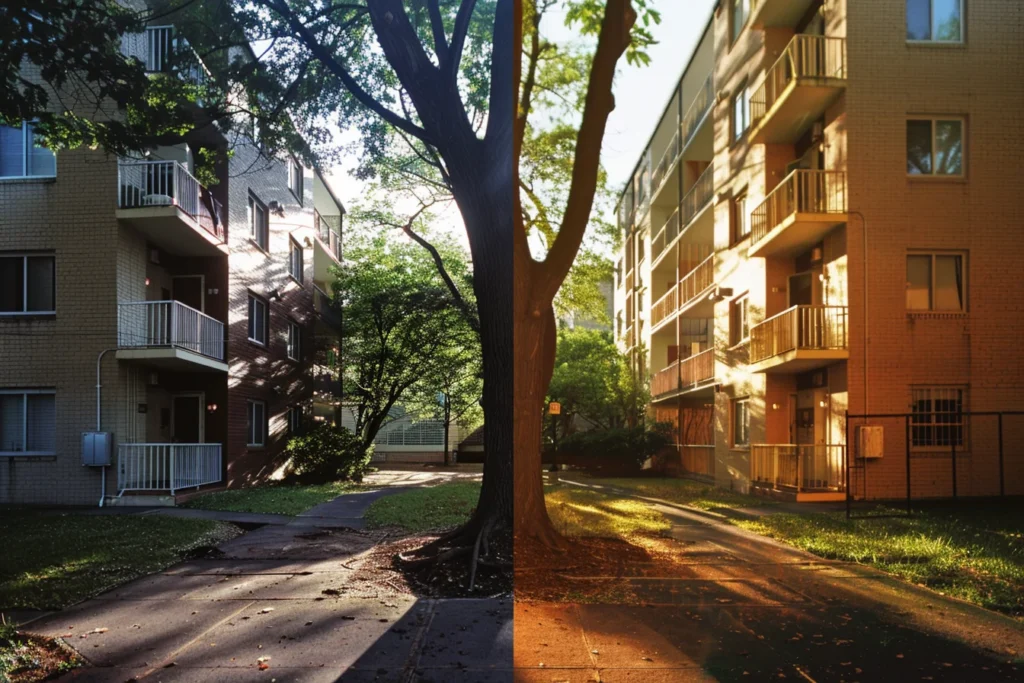
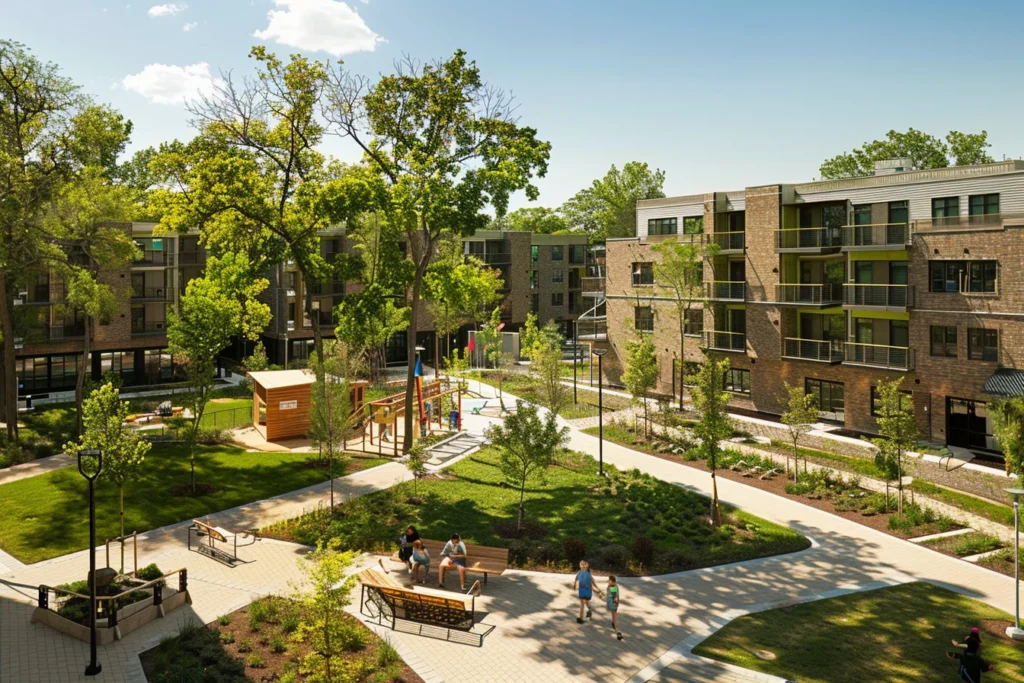
If we can design elevated villas to preserve trees for the wealthy, why not homes for everyone else?
The question sounds rhetorical. The answer is supposed to be “cost.” Affordable housing operates on razor-thin margins. Custom foundations, arborist consultations, site-sensitive design—these sound like luxuries reserved for $2 million hillside retreats.
But what if we’ve been thinking about this backwards?
What if tree preservation isn’t a premium feature to add—but a cost-saving strategy that’s been hiding in plain sight?
Why Trees Matter More in Affordable Housing
The communities that benefit most from mature tree canopy are the ones least likely to have it.
Dr. Sarah Chen, urban health researcher, has documented the disparity: “Low-income neighborhoods average 15-20% less tree cover than affluent areas in the same city. Yet these are precisely the communities experiencing greater heat vulnerability, higher energy burdens, and more limited access to cooling infrastructure.”
The data is stark:
Mature tree shade reduces residential cooling costs by 20-30%
Canopy coverage lowers ambient temperature by 5-10°F
Tree-lined streets show 15% higher property values and faster appreciation
Heat-related illness drops 40% in adequately shaded neighborhoods
A tree preserved is energy equity delivered.
When an affordable housing resident is spending 18% of income on utilities, that 20-30% cooling reduction isn’t aesthetic—it’s survival math.
What It Actually Costs
Here’s the truth about tree-preservation design in affordable housing: the premium is smaller than assumed, and the payback is faster.
Austin Multiplex Case Study:
A fourplex development had four heritage live oaks positioned across 40% of the buildable area. Standard approach: clear and build. Alternative approach: design around them.
Cost delta:
Pier-and-beam foundation modifications: +$18,000
Arborist consultation and root mapping: +$2,400
Modified grading plan: +$3,200
Total premium: $23,600 (roughly 4% of total construction cost)
Payback:
Annual HVAC savings (all units): $6,200
Avoided landscaping/irrigation: $8,500 (one-time)
Financial payback: 3.8 years
Carbon payback: 2.1 years
But here’s what the numbers don’t show: resident feedback consistently mentioned the oaks as the primary reason they felt “lucky” to live there. The trees transformed the development from “affordable housing” to “a place people wanted to stay.”
[IMAGE 3: Before/after site plan showing building footprint designed around preserved trees]
The Design Toolkit (Abbreviated)
The gap between “we can’t afford to preserve trees” and “we can’t afford not to” is often just knowledge—knowing which tactics work at which price points.
Foundation Strategies:
Helical piers: Minimal excavation, thread between root zones (~5-8% premium)
Grade beams: Bridge over root areas without deep digging
Pier-and-beam: Classic approach, higher maintenance but proven
Site Planning:
Map root zones before schematic design (saves redesign costs)
Orient buildings to maximize existing shade on west/south walls
Use permeable pavers under canopy (reduces stormwater infrastructure)
The Decision Framework:
Not every tree is worth preserving at any cost. We use a three-tier triage:
Consider: Medium value, higher cost (10-15% premium)—run the payback math
Replace: Diseased, invasive, or preservation cost >15%
The framework includes carbon calculations, energy modeling, and lifecycle cost analysis—but we’ve found the tipping points are surprisingly consistent across climates and typologies.
What Changes at Scale
Individual projects prove the concept. But systems change happens through policy.
Portland’s approach: Affordable housing developers who preserve mature trees receive:
Expedited permitting (saving 45-60 days)
Reduced impact fees (averaging $8,000 per unit)
Additional height/density allowances in exchange for canopy retention
Result: Tree preservation rates in affordable housing increased from 12% to 47% of eligible projects in three years.
Brooklyn’s innovation: The city created a “Green Canopy Fund” that directly subsidizes the foundation cost premium for affordable housing projects preserving mature trees. Funded through a surcharge on luxury developments that clear sites.
These aren’t charity programs—they’re recognizing that urban tree canopy is public health infrastructure.
The Missing Conversation
Here’s what we’re not discussing enough in affordable housing design:
Thermal equity. We obsess over square footage and unit count, but rarely over how hot those units get in July. A 600 sq ft apartment under a mature oak is more livable than an 800 sq ft unit in full sun.
Longevity. Trees preserved today will still be providing shade, cooling, and value in 50 years. The HVAC unit we’re speccing? Replaced three times in that span.
Dignity. Yes, the carbon math works. Yes, the energy savings are real. But there’s something else: residents in tree-preserved affordable housing report feeling more “at home” and express greater pride in their neighborhood. That’s not quantifiable, but it matters.
Designing Shade as a Social Good
The future of sustainability isn’t about luxury eco-villas that few can afford. It’s about democratizing access to the environmental amenities that should be basic: shade, thermal comfort, connection to living systems.
Preserving trees in affordable housing isn’t charity. It’s not even just good design.
It’s recognizing that the people who can least afford high energy bills deserve the cooling infrastructure that reduces them.
The tools exist. The economics work. The policy mechanisms are emerging. What’s needed now is a shift in how we frame the question.
Not: “Can we afford to preserve these trees?”
But: “Can we afford to cut them down?”
What We’re Working On
We’re developing a comprehensive Affordable Tree-Preservation Toolkit that includes:
Cost estimation models for different foundation strategies
Energy payback calculators specific to affordable housing metrics
Root zone mapping protocols that don’t require expensive arborist surveys
Policy templates cities can adapt for preservation incentives
Case study library with complete financial breakdowns
The challenge: Every climate zone, soil type, and tree species combination creates different variables. Cookie-cutter solutions don’t work.
What we need: More projects. More data. More developers willing to try the approach and share results.
If you’re working on affordable housing and want to explore tree-preservation design for your project, we’d love to talk. We’re especially interested in:
Projects in climate zones we haven’t documented yet
Novel foundation approaches that reduce the cost premium
Policy innovations your city is considering
Failed attempts (we learn as much from what didn’t work)
Get in Touch
Considering tree preservation for your affordable housing project?
Contact us to discuss:
Site-specific feasibility assessment
Cost-benefit analysis for your context
Foundation strategy recommendations
Policy navigation and incentive applications
Researching this topic for policy or academic work?
We’re building a collaborative database of tree-preservation outcomes in affordable housing. Data sharing partnerships welcome.
A data-driven reality check on pier-and-beam sustainability claims
The Greenwashed Pier
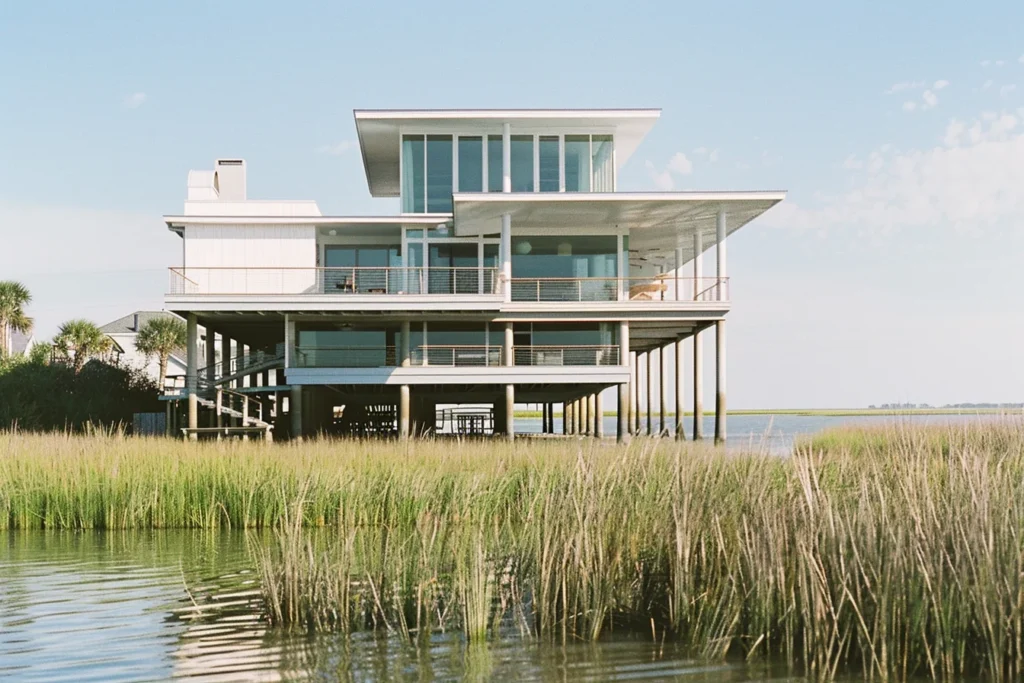
In the name of sustainability, architects have raised entire buildings off the ground.
The pitch is compelling: elevate your structure, save the trees, minimize site disturbance, tread lightly on the earth. You’ve seen the portfolio photos—sleek steel-framed homes hovering above forest floors, boardwalks threading through wetlands, pavilions perched delicately among oak groves.
The elevated structure has become shorthand for environmental consciousness. It says: We care. We didn’t bulldoze. We floated above the problem.
But sometimes what we lift up comes back down—literally.
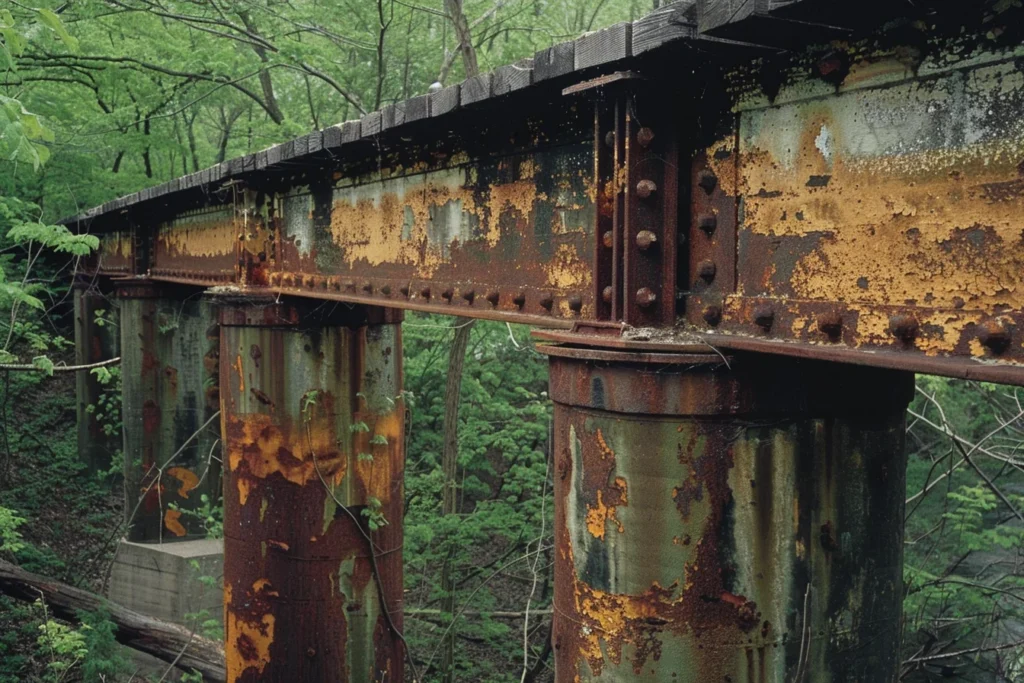
Beneath those elegant portfolios lies a more complicated story: corroded steel piers requiring replacement at year twelve. Thermal bridging that doubles heating loads. Concentrated runoff creating erosion gullies worse than a conventional foundation would have caused. Maintenance costs that exceed the initial “savings” from site preservation.
This isn’t an argument against all elevated structures. It’s a question about when elevation actually serves sustainability—and when it merely performs it.
Is lifting a structure truly lighter on the planet?
The answer depends entirely on context. And the contexts where elevation makes genuine environmental sense are narrower than current architectural fashion suggests.
The Origin Story of the Elevated Ideal
To understand how we arrived at “elevate everything,” we need to trace the lineage.
Vernacular Wisdom
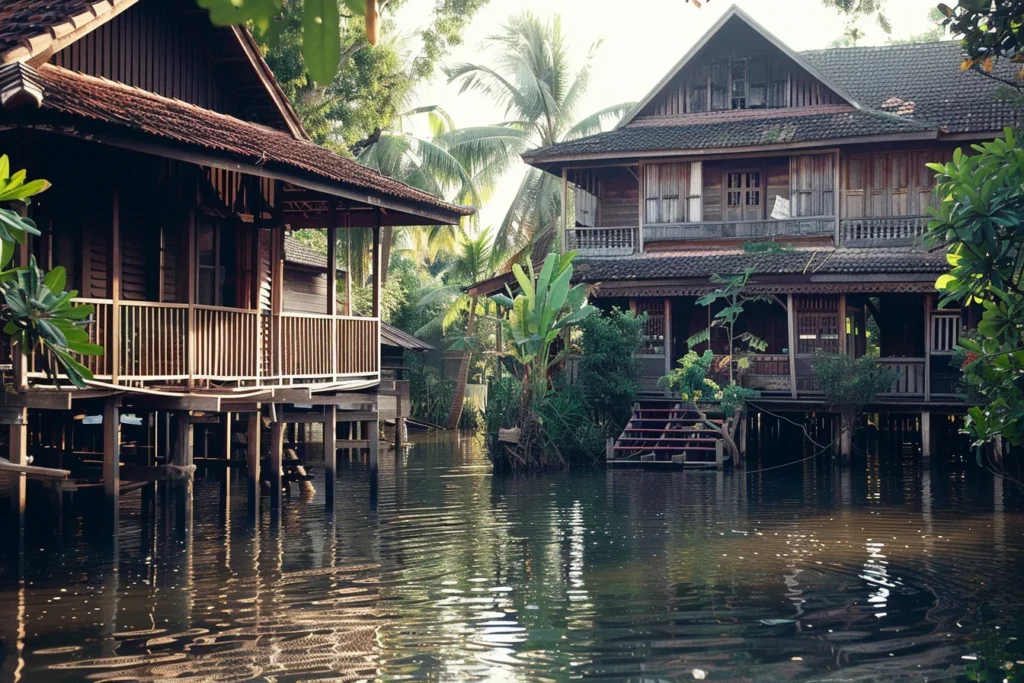
Elevated structures have deep roots in tropical and flood-prone regions. Thai stilt houses, Melanesian pile dwellings, Queenslander homes—these weren’t aesthetic choices. They were survival strategies.
Elevation solved specific, measurable problems:
Flood resilience in monsoon zones
Ventilation in hot, humid climates where rising heat beneath the structure created natural airflow
Pest control by raising living spaces above ground-dwelling insects and rodents
Food storage in cool, dry, elevated spaces
These structures emerged from centuries of environmental observation. They were appropriate technology for their context.
The Translation Problem
What happened in the late 20th and early 21st centuries was a translation of this vernacular strategy into a universal environmental aesthetic.
As sustainability became a design imperative, elevated structures migrated from their original contexts—tropical floodplains, steep coastal sites—into temperate forests, suburban hillsides, and relatively flat sites where the traditional justifications didn’t apply.
The logic shifted from “We must elevate to survive” to “We should elevate to preserve.”
Instagram Sustainability
Elevated walkways and hovering pavilions photograph beautifully. They provide dramatic cantilevers, views through tree canopies, and a visible gesture toward minimal site impact. They signal environmental virtue in a way a slab foundation simply can’t.
This is “Instagram sustainability”—design choices driven more by how they communicate environmental values than by their actual environmental performance.
Dr. Emma Whitfield, environmental design researcher at MIT, studies the gap between perceived and measured sustainability: “We’ve documented dozens of projects where the elevated structure became a marketing centerpiece—’We saved every tree!’—while the lifecycle analysis showed significantly higher carbon footprint than selective removal and conventional construction would have generated. The elevation wasn’t serving the environment. It was serving the brand narrative.”
The Embodied Carbon Reality
Let’s run the numbers that rarely appear in the glossy project features.
Material Intensity Comparison
Consider a 2,000 square foot single-story structure in a temperate climate (no flood risk, moderate slope).
Option A: Conventional slab-on-grade
6-inch concrete slab with WWF and vapor barrier
Perimeter insulation
Minimal excavation (8-12 inches)
Embodied carbon: ~48 lbs CO₂/sq ft
Total: 96,000 lbs CO₂
Option B: Elevated steel pier-and-beam
16-20 steel piers, 6-10 feet deep
Steel beam grid
Floor joists and subfloor
Elevated decking system
Bracing and connections
Embodied carbon: ~67 lbs CO₂/sq ft
Total: 134,000 lbs CO₂
Delta: +38,000 lbs CO₂ (39% increase)
This is before accounting for:
Increased heating/cooling loads from thermal bridging
Replacement cycles for deck materials (typically 15-25 years vs. 50+ for slab)
James Liu (the same carbon accountant we consulted for tree preservation math) provided context: “The paradox is that people choose elevation to avoid disturbing a 40-square-foot area where a few trees grow, but in doing so they specify materials that generate 20-30 tons of additional CO₂. They’ve optimized for visible site impact while externalizing the carbon impact.”
He continued: “If you remove two mature trees—call it 2,000 lbs of standing sequestered carbon—but avoid 38,000 lbs of embodied carbon in the structure, you’re carbon-positive on day one. Those removed trees can be replaced with saplings that will recapture that carbon within 15-20 years, while the avoided structural carbon is a permanent benefit.”
“You saved two trees, but added ten tons of steel.” — James Liu, environmental consultanT
When the Math Reverses
There are scenarios where elevation’s embodied carbon is justified:
Genuine flood risk where the alternative is repeated flood damage and reconstruction
Archeological or ecological preservation where site disturbance would cause irreversible loss
Extremely steep slopes where conventional foundation would require massive cut-and-fill
But for a typical residential or small commercial project in temperate zones without these conditions? The carbon math rarely supports elevation.
The Performance Penalties
Beyond embodied carbon, elevated structures introduce operational inefficiencies that persist for the building’s lifetime.
Thermal Bridging: The Hidden Energy Tax
Steel is an excellent conductor—which is precisely the problem when you’re using it as structural support between conditioned and unconditioned spaces.
Thermal bridging occurs when heat transfers through highly conductive materials, bypassing insulation. In elevated structures, every steel pier, beam, and connection creates a direct thermal pathway between the building interior and exterior.
Dr. Michael Torres, building science consultant and author of The Thermal Envelope Handbook, explained the impact: “We’ve measured elevated structures where 30-40% of heating loss occurs through the pier connections and floor assembly, even when the floor itself is well-insulated. The metal structure essentially acts as a radiator in winter and a heat collector in summer.”
Quantified impact:
Conventional slab with perimeter insulation: R-value of 15-20 at thermal boundary
Elevated steel structure with insulated floor: Effective R-value of 8-12 due to bridging
Result: 40-60% higher heating/cooling loads for the floor assembly
In a Minneapolis climate, this translates to approximately $800-1,200 in additional annual heating costs for a typical 2,000 sq ft home.
Moisture Management: Where Water Goes Wrong
One supposed advantage of elevated structures is that they “let water pass underneath.” In theory, this minimizes runoff disruption.
In practice, it often concentrates problems.
Sarah Hendricks, geotechnical engineer specializing in stormwater management, shared a common failure mode: “When you elevate a building, you create a rain shadow effect. Water running off the roof concentrates at the drip line, then channels through the pier system. Without proper grade management, you get focused erosion—gullies forming exactly where the piers are located, which then undermines pier stability.”
She described a project she was called to assess: “A beautiful forest home, elevated to preserve the understory. Fifteen years in, we found active erosion had exposed pier footings, and several piers were settling differentially. The repair required excavating around each pier, installing drainage systems, and stabilizing the grade—work that impacted more soil than a conventional foundation would have disturbed initially.”
Additional moisture issues:
Condensation: Temperature differential between ground and underside of elevated floor creates condensation on framing
Reduced air circulation: Contrary to tropical precedents, enclosed crawl spaces beneath elevated structures in temperate climates often trap moisture
Inaccessible drainage: When problems develop under an elevated structure, diagnosis and repair are expensive
The Maintenance Reality
Elevated structures require ongoing intervention that rarely appears in project cost projections.
Tyler Robertson, building inspector with 28 years in residential and commercial construction, maintains a database of maintenance issues: “Elevated structures fail gradually. You don’t notice the deck fasteners corroding or the beam coatings failing until you have structural problems. By year 10-15, you’re looking at comprehensive refinishing, fastener replacement, and often structural reinforcement.”
Typical 30-year maintenance schedule for elevated steel structures:
Years 8-12: First comprehensive refinishing ($8,000-15,000)
Years 15-18: Fastener/connection inspection and replacement ($5,000-12,000)
Years 20-25: Decking replacement ($12,000-25,000)
Years 25-30: Major structural assessment and potential pier reinforcement ($15,000-40,000)
Compare this to a well-executed slab-on-grade: minor crack repair and surface resealing, typically under $3,000 total over 30 years
Pier plumbness and settlement
Coating integrity on all steel members
Fastener corrosion at beam-to-pier connections
Decking moisture content and rot
Joist deflection and bounce
Drainage patterns and erosion
Condensation on underside of floor assembly
Bracing integrity
Accessibility of utilities (plumbing, electrical under deck)
When Elevation Makes Sense
Despite the criticisms above, elevation remains the right choice in specific contexts.
Legitimate Use Cases
1. Flood Risk Mitigation
If your site lies in a FEMA-designated flood zone with base flood elevation requirements, elevation isn’t optional—it’s code. Moreover, it’s genuinely protective.
Threshold guideline: Flood recurrence interval of 1:50 years or greater → elevation justified
Provides genuine resilience
Reduces insurance costs
Avoids repetitive loss from flood events
2. Steep or Highly Erosive Slopes
On slopes exceeding 15-20%, conventional foundation systems require extensive cut-and-fill. The earthwork often causes more ecological damage than an elevated pier system.
Dr. Elena Vasquez, landscape architect specializing in steep-site design: “The threshold is roughly 15 degrees of slope. Beyond that, the soil disturbance required for a conventional foundation—terracing, retaining walls, drainage systems—exceeds the impact of a pier system. Below that threshold, you’re usually better off working with selective grading.”
Calculation: If earthwork volume exceeds 50 cubic yards, evaluate pier system as alternative
3. Archeological or Ecologically Sensitive Zones
Some sites contain features that absolutely cannot be disturbed:
Archeological remains
Critical habitat for endangered species
Old-growth root systems
Wetland buffers where fill is prohibited
In these cases, elevation is preservation by necessity, not choice.
4. Temporary or Relocatable Structures
If the building is designed for a limited lifespan or may need to be relocated, pier systems offer genuine advantages in reversibility.
The Key Principle
Quote from Dr. Margaret Soto, sustainable design consultant: “The key is not ‘never elevate,’ but ‘only elevate when you can’t design around it.’ If elevation is solving a genuine performance problem—flooding, slope, protection—do it well and accept the trade-offs. If elevation is solving an aesthetic problem or avoiding a difficult design conversation, reconsider.”
The Alternative: Selective Removal & Regenerative Planting
Sometimes the more sustainable path is counterintuitive: remove a small number of trees to avoid the elevated structure altogether.
Ecological ROI Over Decades
The standard environmental narrative treats every existing tree as sacred. But ecologists think in terms of system health over time, not static preservation.
Dr. James Whitmore, forest ecologist at University of Washington, challenged the preservation-at-all-costs mindset: “A site with three mature trees and nothing else isn’t ecologically rich—it’s ecologically stagnant. If removing one mature tree allows conventional construction and funding for planting thirty native saplings plus understory species, you’ve improved site biodiversity and long-term carbon sequestration.”
He explained the concept of ecological return on investment: “A healthy forest has multi-age canopy structure. Preserving only the oldest trees while preventing regeneration—which often happens when sites are disturbed but not fully cleared—can produce worse long-term outcomes than thoughtful selective removal followed by comprehensive native restoration.”
The 50-Year View
Consider two scenarios for the same site:
Scenario A: Maximum preservation via elevation
Three mature oaks preserved (combined 140 lbs CO₂/year sequestration)
Elevated structure adds 38,000 lbs embodied CO₂
Limited budget remaining for additional plantings
50-year net carbon: +31,000 lbs CO₂ debt
Scenario B: Selective removal with regenerative planting
One mature oak removed (loses 48 lbs CO₂/year sequestration)
Conventional structure (38,000 lbs less embodied CO₂)
Budget allows planting twenty native trees plus understory
50-year net carbon: -12,000 lbs CO₂ benefit
The math shifts when you account for the full system over time.
When to Choose Removal
Linda Hartwell, architect featured in our tree preservation case study, offered nuanced guidance: “My first instinct is always to preserve mature trees. But I’ve learned to ask: Is this tree healthy? Is it appropriately sited for the building program? Could we remove it, use that material value to fund comprehensive native planting, and create better overall site ecology?”
She described a project where removing two declining white pines allowed conventional construction and funded installation of forty native species: “Twenty years from now, that site will have richer biodiversity, better water infiltration, and higher total carbon sequestration than if we’d preserved two aging trees by elevating. It felt wrong in the moment. The data said it was right.”
Q: As an arborist who advocates for tree preservation, when do you recommend removal over building around a tree?
Maria Rodriguez, Certified Arborist: “If the tree is in structural decline—significant decay, root disease, storm damage—preservation may just be prolonging the inevitable. I’d rather see a diseased oak removed safely and replaced with two healthy saplings than see a structure designed around a tree that falls in five years.
Also, if preservation requires such extreme building gymnastics that you compromise building performance—creating unusable spaces, excessive HVAC loads, structural complexity—you’re not serving either the building or the environment well. Sometimes the best choice is removal with excellent replanting.”
Decision Matrix: The Nuanced Framework
The choice between elevated and conventional construction isn’t binary. Here’s a framework for evaluating trade-offs specific to your site and program.
Sustainability Trade-Off Comparison
Factor
Pier & Beam Elevation
Slab-on-Grade
Hybrid Approach
Embodied Carbon
High (steel-intensive)
Moderate (concrete)
Moderate-High
Site Impact
Low (minimal excavation)
High (site disturbance)
Medium (selective)
Maintenance
High (refinishing, decay)
Low (minimal upkeep)
Medium (limited exposure)
Longevity
Variable (depends on materials)
High (50+ years)
Medium-High
Thermal Performance
Poor (bridging issues)
Excellent (insulated perimeter)
Good (reduced bridging)
Moisture Risk
Moderate-High (concentration)
Low (controlled drainage)
Low-Moderate
Accessibility
Poor (utilities, repairs)
Excellent (easy access)
Good
Cost Premium
+15-40% initial
Baseline
+10-20% initial
Flood Resilience
Excellent
Poor
Good (engineered)
Sloped Site Suitability
Excellent
Poor
Moderate
The Interactive Tool
Just as we created a Tree Payback Calculator, we’ve developed an Elevation Trade-Off Tool that helps quantify these factors for your specific project.
Inputs:
Site slope percentage
Flood zone designation
Number and health of existing trees
Project budget range
Climate zone
Expected building lifespan
Outputs:
Embodied carbon comparison (30-year lifecycle)
Estimated maintenance costs over 30 years
Site impact score (soil disturbance, tree loss)
Recommended approach with sensitivity analysis
The tool doesn’t tell you what to do—it shows you what you’re trading.
Lessons from the Field
Theory matters. But what actually happens on the ground often tells a different story.
Project 1: The Pavilion That Wasn’t
Location: Asheville, North Carolina Program: 1,200 sq ft educational pavilion in forest setting Approach: Elevated steel structure to preserve understory
The Promise: Minimal site impact, preserve all existing vegetation, create floating experience in canopy
The Reality (Year 12):
Pier coatings failed; active corrosion on 8 of 12 supports
Site manager Tom Brewster reflected: “We thought we were doing the right thing. But the steel wasn’t spec’d for the humidity levels we actually experience. Water management beneath the structure was an afterthought. Now we’re spending more to fix it than we saved by not clearing the site conventionally.”
Key Takeaway: If you elevate, spec for the actual long-term conditions, not the ideal ones. Budget for maintenance from day one.
Project 2: The Boardwalk That Rotted
Location: Seattle, Washington Program: 400-foot elevated boardwalk through wetland buffer Approach: Timber pier-and-beam with composite decking
The Promise: Provide wetland access without impact, educational amenity
Eight piers settling due to undermined footings from concentrated runoff
Entire structure condemned as unsafe
Replacement approach: Engineered gravel path at grade with permeable surface and integrated bioswales—lower impact, lower maintenance, equal access.
Park director Rachel Kim: “We learned that ‘low impact’ elevation only works if the structure actually lasts. When it fails prematurely, you’ve impacted the site twice—once building it, again removing and replacing it.”
Key Takeaway: In high-moisture environments, timber elevated structures have shortened lifespans. Alternative access solutions may outperform despite higher initial site disturbance.
Project 3: The Floodplain Home That Got It Right
Location: Charleston, South Carolina Program: 2,400 sq ft single-family home in FEMA Zone AE Approach: Elevated concrete pier system with engineered breakaway walls
The Design Choices:
Concrete piers rather than steel (longer lifespan in coastal environment)
Properly engineered drainage system beneath structure
Breakaway walls that collapse in flood events without damaging primary structure
Utilities elevated and protected
Comprehensive maintenance plan from day one
The Reality (Year 16):
Structure survived two significant flood events (2015, 2018) with zero interior damage
Neighbors on conventional foundations experienced $50,000-120,000 in flood repairs
Annual maintenance costs averaging $800/year
No structural issues; piers performing as designed
Homeowner James Chen (yes, same James from our tree preservation article—he gets around): “This wasn’t about aesthetics or environmental virtue signaling. We’re in a genuine flood zone. Elevation was engineering, not ideology. Because it solved a real problem, we invested in doing it right—proper materials, proper drainage, proper maintenance. It’s worked exactly as intended.”
Key Takeaway: When elevation solves a genuine performance requirement, invest in appropriate materials and maintenance. The economics work when the application is correct.
The elevated structure isn’t inherently good or bad. It’s a tool with specific appropriate applications.
The problem isn’t the tool—it’s the unexamined assumption that elevation equals environmental responsibility.
Good environmental design requires context-specific trade-offs, not aesthetic defaults. It demands that we measure what we’re actually achieving, not what we’re performing. It asks uncomfortable questions:
Does preserving three trees justify 20 tons of additional embodied carbon?
Would selective removal and comprehensive native replanting produce better ecological outcomes over 50 years?
Are we elevating to solve a problem, or to signal virtue?
Have we honestly assessed lifecycle maintenance, or are we externalizing that cost to the future?
The answers vary by site, climate, program, and context. There is no universal solution.
But there is a universal principle: Sustainable design isn’t about floating above nature—it’s about understanding when to step lightly, and when to step back.
Sometimes stepping back means acknowledging that conventional construction with thoughtful mitigation produces better total outcomes than elevated construction with problematic maintenance trajectories.
Sometimes stepping lightly means using piers appropriately—in flood zones, on steep slopes, in genuinely sensitive areas—and investing in the materials and maintenance to do it right.
The discipline is in doing the math, every time, for every site. Not assuming the answer before we’ve asked the question.
Additional Resources
Lifecycle Assessment Database: Embodied carbon data for structural systems at EmbodiedCarbon.org
FEMA Flood Maps: Determine if your site justifies flood-resistant elevation at MSC.FEMA.gov
Maintenance Standards: Elevated structure inspection protocols at BuildingInspectors.org
Native Planting Guides: Regional species selection at NativePlants.org
A data-driven guide to preserving mature trees in development projects
The False Economy of the Chainsaw
“It’s faster. It’s cheaper. It’s what everyone does.”
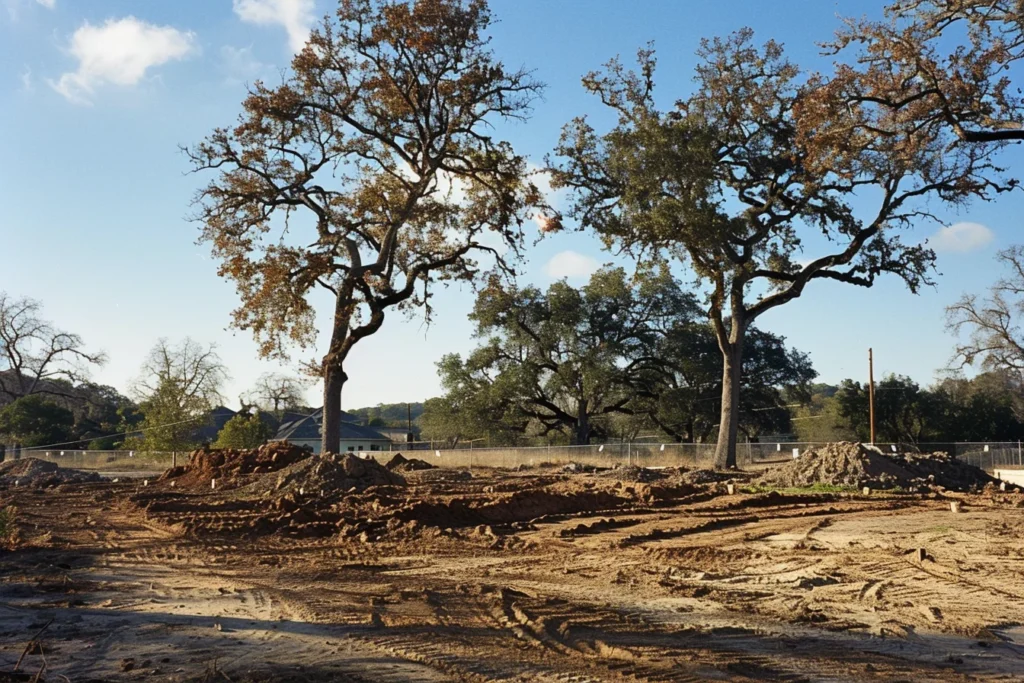
Stand on any pre-development site with mature trees, and you’ll hear this refrain from contractors, project managers, and budget-conscious developers. A sixty-year-old oak stands directly where the foundation needs to go. The chainsaw solves the problem in an afternoon. The stump grinder follows the next day. By week’s end, the lot is clear, level, and ready for concrete.
We’ve all heard the justification. We’ve probably made it ourselves.
But is cutting down that 60-year-old oak actually cheaper in the long run?
The answer, increasingly backed by hard numbers, is no. Trees aren’t just landscape features or aesthetic amenities. They’re living carbon banks, thermal management systems, and property value enhancers with quantifiable returns. Removing them has real consequences—consequences that can be translated into dollars, tons of CO₂, and kilowatt-hours.
This isn’t about sentimentality. This is about math.
The Hidden Math of a Tree
Let’s start with what a mature tree actually does, measured in units that matter to development budgets.
The Carbon Bank Account
A mature oak tree—let’s say 60 years old, with a trunk diameter of 24 inches—sequesters approximately 48 pounds of CO₂ per year. Over its lifetime, that single tree has already absorbed roughly 2,880 pounds of carbon dioxide. That’s equivalent to removing a small car from the road for five years.
But species matter. Here’s what the data shows:
Oak (mature): 48 lbs CO₂/year
Sycamore: 42 lbs CO₂/year
Pine: 35 lbs CO₂/year
Maple: 40 lbs CO₂/year
Now compare that to the replacement narrative. When we cut down a mature tree and plant a sapling, we’re not making an even trade. That new tree won’t match the carbon sequestration rate of its predecessor for decades. A five-year-old oak sapling captures roughly 5 pounds of CO₂ per year—about 10% of the mature tree’s capacity.
The embodied carbon deficit: Cutting down a 60-year-old oak and replanting creates a carbon gap that won’t close for 50-60 years. In carbon accounting terms, you’ve just withdrawn from an account that took six decades to build.
[SIDEBAR A – TABLE: “Average CO₂ Absorbed by Common Urban Trees”]
Species | Mature (40+ years) | Young (5-15 years)
Oak | 48 lbs/year | 5-12 lbs/year
Sycamore | 42 lbs/year | 6-10 lbs/year
Pine | 35 lbs/year | 4-8 lbs/year
Maple | 40 lbs/year | 5-11 lbs/year
Sweetgum | 38 lbs/year | 6-10 lbs/year
The Cost Side of the Equation
“But preserving trees costs more upfront.”
This is true. Designing around mature trees requires additional engineering, thoughtful foundation work, and construction sequencing that respects root zones. It’s not the default approach, which means it takes more time and expertise.
But let’s run the numbers on what “more expensive” actually means.
Real Cost Comparison: Two Oaks and a Foundation
Consider a residential project in Austin, Texas. The site had two mature live oaks, each approximately 70 years old, positioned near the planned foundation corners. The developer had two options:
Option A: Clear and build (the default)
Tree removal: $2,400
Stump grinding: $800
New landscaping (immediate): $18,000
New irrigation system: $6,500
Five years of establishment care: $4,000
Total: $31,700
Option B: Preserve and adapt
Arborist consultation: $1,200
Root zone mapping: $2,500
Custom pier-and-beam foundation design: $12,000
Construction monitoring: $3,800
Root protection barriers: $2,200
Modified grading plan: $3,300
Total: $25,000
The preservation approach was $6,700 cheaper before accounting for any energy or carbon benefits.
But the real kicker? Over the next ten years, those preserved trees delivered an estimated $12,000 in reduced cooling costs. The property also sold 18% faster than comparable treeless lots in the same development, with a 7% price premium.
“You can’t replant a 100-year-old microclimate.” — Sarah Chen, landscape architect and arborist
Amortizing the Premium
Even in cases where preservation genuinely costs more upfront, the payback period is remarkably short. A $15,000 premium for foundation modifications, when amortized over 10 years at 5% interest, costs approximately $1,590 per year. If those preserved trees reduce HVAC costs by just $1,000 annually and add $10,000 to resale value, the investment breaks even in under three years.
The Carbon Accounting Perspective
To truly understand what we’re trading when we cut down a tree, I spoke with three professionals who deal with the intersection of construction and ecology daily.
The Arborist: Physiological Value
Mario Rodriguez, certified arborist with 22 years of experience, explained what happens when a mature canopy tree is removed: “People think of trees as individual organisms, but a 60-year-old oak is an entire ecosystem. The root system extends 2-3 times the width of the canopy. The shade structure affects ground temperature, soil moisture, and understory plants. The bark hosts beneficial insects and microbes. When you remove that tree, you’re not removing one thing—you’re removing a system that took decades to establish.”
He continued: “A young replacement tree won’t replicate those functions for 30-40 years minimum. In carbon terms alone, you’re looking at a multi-decade deficit. But you’ve also lost the cooling effect, the stormwater management, the wildlife habitat, and the air quality improvements that mature tree provides today.”
The Structural Engineer: What It Really Takes
David Park, PE, specializes in foundation systems that work with existing trees: “The industry defaults to ‘clear and build’ because it’s simpler on paper. But once you learn the techniques, designing around trees isn’t that complicated. We use pier-and-beam systems, helical piles, or grade beams that bridge over root zones. The key is getting an arborist involved early to map the critical root zones.”
Park shared a surprising insight: “In clay soils—common in much of Texas and the Southeast—preserving large trees can actually reduce foundation problems. Mature trees stabilize soil moisture, which prevents the expansion-contraction cycles that crack slabs. I’ve seen cases where removing trees led to $40,000 in foundation repairs within five years.”
The Carbon Accountant: Embodied Carbon in the Alternative
James Liu, environmental consultant specializing in construction carbon accounting, helps developers understand the full carbon footprint of building decisions: “When you cut down a mature tree, you’re not just losing its future carbon sequestration. You’re triggering a cascade of embodied carbon. The chainsaw runs on gasoline. The stump grinder too. You bring in fill dirt—that’s hauling trucks, diesel emissions. You pour extra concrete for a conventional foundation—cement is roughly 8% of global CO₂ emissions. Then you plant replacement trees, which require nursery inputs, transportation, and years of irrigation.”
Liu walked me through a simplified equation:
CO₂ Payback Calculation:
$$\text{CO₂ Payback (years)} = \frac{\text{CO₂ saved by tree preservation (lbs)}}{\text{CO₂ emitted by alternative approach (lbs)}}$$
Example scenario:
Preserving two mature oaks (combined sequestration: 96 lbs CO₂/year)
Alternative: Remove trees, pour 4 extra cubic yards of concrete, plant two saplings
Extra concrete embodied carbon: ~800 lbs CO₂
Tree removal/processing emissions: ~150 lbs CO₂
Replacement trees sequestration: 10 lbs CO₂/year (combined)
Net annual benefit of preservation: 86 lbs CO₂/year
Payback period: ~11 years for embodied carbon, then net positive annually
“What people miss,” Liu explained, “is that the carbon math flips dramatically in years 3-5. The preserved tree keeps sequestering at full capacity while the alternative scenario is still in carbon debt.”
The Cooling Dividend
Beyond carbon, mature trees deliver something immediately tangible to building occupants: thermal comfort.
Quantifying the Shade Effect
Research from the University of Georgia and USDA Forest Service has documented what anyone standing under an oak tree in July instinctively knows: tree shade dramatically reduces heat. But the effect is more profound than most realize.
A mature tree canopy can:
Reduce surface temperatures by 20-45°F compared to unshaded areas
Lower ambient air temperature in the immediate vicinity by 5-10°F through evapotranspiration
Decrease building cooling loads by 15-30% depending on tree placement relative to windows and walls
In hot climates, this isn’t trivial. Let’s model a typical scenario:
Cooling Load Calculation: Austin, Texas
2,200 sq ft home, conventionally insulated
Without tree shade: Annual cooling cost ~$1,800
With mature tree shade on south/west sides: Annual cooling cost ~$1,250
Annual savings: $550
Over a 30-year mortgage, that’s $16,500 in cumulative savings—before accounting for energy price inflation.
[IMAGE 8: Graph showing “Cooling Cost Comparison Over 30 Years” – two lines diverging, labeled “With Preserved Trees” and “Without Trees”]
The Urban Heat Island Effect
The cooling benefit scales beyond individual properties. Cities with mature tree canopy see measurable reductions in urban heat island effects. A 2023 study of Atlanta neighborhoods found that areas with 40%+ tree cover averaged 8°F cooler during summer heat waves than areas with less than 10% cover.
For developers working on multi-unit or mixed-use projects, preserving existing trees isn’t just about individual property benefits—it’s about contributing to (or degrading) neighborhood livability.
Property Value Uplift
The market has spoken: people value trees.
A 2024 analysis of residential sales in Portland, Oregon, found that homes with mature street trees and preserved specimen trees on-lot sold for an average of 7-12% more than comparable homes without significant tree cover. They also sold 15% faster.
In dollar terms, for a $500,000 home, that’s $35,000-$60,000 in added value—far exceeding the typical cost premium for preservation-focused design.
[SIDEBAR B – EXPERT QUOTES]
“The physiological value of a mature canopy can’t be replicated by saplings for decades. You’re removing a system, not just a tree.” — Maria Rodriguez, Certified Arborist
“In clay soils, preserving large trees can prevent the foundation problems that develop when tree roots are removed.” — David Park, PE, Structural Engineer
“The carbon math flips dramatically in years 3-5. The preserved tree is generating ongoing benefits while the alternative is still in debt.” — James Liu, Environmental Consultant
The Tree Payback Calculator
Theory is useful. Calculations for your specific project are better.
That’s why we’ve built a simple tool to help architects, developers, and property owners evaluate the financial and environmental case for tree preservation in their projects.
How the Calculator Works
Inputs:
Number of mature trees on site (by species)
Estimated construction cost increase for preservation design
Your climate zone (heating degree days + cooling degree days)
Local electricity rates
Project timeline
Outputs:
Carbon payback period (years until preservation approach becomes net carbon positive)
Financial payback period (years until energy savings exceed upfront costs)
30-year net present value comparison
Estimated property value impact
Total CO₂ equivalence (translated to “cars off the road” or “transatlantic flights avoided”)
Technical Note
The calculator uses USDA Forest Service i-Tree methodology for carbon sequestration calculations, Department of Energy building simulation models for cooling load estimates, and local utility rate databases. It can be embedded directly in project proposals or used during feasibility discussions.
Try the calculator: [TreePaybackCalculator.com]
The tool is free, requires no registration, and generates a downloadable PDF summary you can include in design documentation or stakeholder presentations.
Case Study: The Oak That Paid for Itself
Sometimes the best argument is a real example.
Background: An Urban Infill in Chapel Hill, North Carolina
Site: 0.4-acre residential lot in an established neighborhood Challenge: Three mature oaks (estimated 80-100 years old) positioned across 60% of the buildable area Client: Young family seeking modern, energy-efficient home Initial recommendation from general contractor: Clear all trees, pour slab foundation, plant new landscaping
The Design Pivot
Architect Linda Hartwell proposed an alternative: redesign the home to wrap around the trees.
“The initial plan was a simple rectangle,” Hartwell explained. “But these oaks had 40-50 foot canopies. They were magnificent. I sketched an L-shaped footprint that preserved all three trees and actually used them as outdoor room definition. The living spaces opened directly into the shade canopies.”
The revised approach required:
Pier-and-beam foundation with strategic pier placement outside root zones
Modified HVAC design (smaller unit, ductless mini-splits in two zones)
Careful construction sequencing with 6-foot root protection fencing
Additional upfront cost: $28,000
The Five-Year Payback
Five years after completion, the project economics tell a compelling story:
Energy Performance:
Predicted annual cooling load: 18,000 kWh (based on regional averages for similar square footage)
Actual annual cooling load: 11,200 kWh
Annual energy savings: $890 (at $0.13/kWh)
Five-year cumulative savings: $4,450
Property Value:
Home appraised $52,000 higher than projected value without trees
Sold after five years for $587,000 vs. neighborhood median of $535,000 for similar size/age homes without significant tree cover
Premium attributed to tree integration: 9.7%
Carbon Accounting:
Three preserved oaks sequester ~140 lbs CO₂/year (combined)
Avoided embodied carbon from conventional foundation: ~1,200 lbs CO₂
Carbon payback period: 4.2 years
Ongoing annual carbon benefit: 140 lbs CO₂
Financial Summary:
Extra upfront investment: $28,000
Five-year energy savings: $4,450
Resale premium: $52,000
Net financial benefit: $28,450
Payback period: Less than 3 years on energy alone; immediate when property value included
The homeowner, Marcus Chen, reflected on the decision: “We didn’t choose the tree-preservation design because we ran the numbers. We chose it because it felt right. But having the numbers validate that choice—and exceed expectations—made us advocates. We tell everyone now: don’t cut down mature trees unless you absolutely have no other option.”
Reframing the Design Conversation
The gap between what we know about tree value and what actually happens in development isn’t primarily technical. It’s conversational.
Most projects default to tree removal not because preservation is impossible, but because the conversation never happens—or happens too late in the process.
How to Start the Preservation Conversation
For Architects and Designers:
Lead with site analysis. Before schematic design, engage an arborist to inventory existing trees and identify high-value specimens. Include this in your Phase 1 deliverables, not as an afterthought.
Present options, not ultimatums. Show the client two or three massing studies: one that preserves maximum trees, one that clears selectively, one that clears entirely. Include preliminary cost estimates for each.
Use the language of ROI, not idealism. Instead of “It would be nice to save these oaks,” try: “Preserving these three oaks adds $18K to foundation costs but delivers $25K in energy savings over 10 years and increases resale value by an estimated $40K.”
Integrate preservation metrics into sustainability documentation. If you’re pursuing LEED, Living Building Challenge, or Passive House certification, preserved mature trees contribute points or credits in multiple categories. Make this explicit.
For Developers and Clients:
Ask the question early. In your first meeting with the design team, specifically ask: “What mature trees are on this site, and what’s the cost-benefit of preserving them?” Don’t wait for the architect to bring it up.
Challenge the “standard practice” assumption. When a contractor says “We need to clear these trees,” ask: “What would it take to not clear them? What’s the premium?” Often, no one has actually calculated it.
Think beyond your ownership timeline. Even if you’re building to sell, the tree-preservation premium often comes back in resale value. If you’re building to hold, the energy savings compound over decades.
Frame it as risk mitigation. In cities with tree preservation ordinances (increasingly common), designing around existing trees can streamline permitting and reduce variance requests.
The RFP Language That Changes Outcomes
Want to ensure your project team seriously considers tree preservation? Include language like this in your RFP or design brief:
“The site includes [number] mature trees, several of which are [species] estimated to be [age] years old. The project team shall conduct a tree inventory and assessment during site analysis and shall present at least two design alternatives: one that maximizes preservation of existing mature trees and one that follows conventional clear-and-build approach. Each alternative shall include preliminary cost estimates, carbon impact analysis, and projected operational energy implications.”
This simple paragraph shifts tree preservation from optional nicety to required analysis.
Q: What if the tree is diseased or structurally unsound? A: Preservation should never compromise safety. An arborist can assess tree health. Diseased trees that pose fall risk should be removed, but often only a portion of the tree needs removal, or treatment can extend the tree’s viable lifespan.
Q: What about root damage during construction? A: This is the primary risk and why arborist consultation is critical. Proper construction technique—root protection zones, hand-digging near roots, avoiding grade changes within drip line—can minimize damage. The key is planning, not prohibition.
Q: Do cities give tax credits for tree preservation? A: Some do. Cities including Atlanta, Austin, Portland, and Seattle offer various incentives ranging from expedited permitting to property tax reductions for developments that preserve mature trees. Check your local tree ordinance.
Q: What if the tree is in the exact center of where the foundation must go? A: Then you likely need to remove it. But “exact center” is rarer than assumed. Often, shifting the building footprint 10-15 feet or rotating the orientation solves the conflict without substantive design compromise.
The New Metric for Responsible Design
We’re in a moment of transition in how we think about land development.
For decades, the default assumption was that development and existing natural systems were fundamentally incompatible. Trees, wetlands, topography—these were obstacles to be overcome. The grading plan was about creating a blank slate.
That paradigm is shifting. It has to.
As climate change makes energy resilience and carbon accounting central to project viability, as buyers and tenants increasingly price in environmental quality, and as regulatory frameworks tighten around tree canopy and stormwater management, the old default becomes untenable.
Preserving mature trees is no longer just an aesthetic preference or an ecological nicety. It’s quantifiable. It’s financially material. It’s a design competency that separates thoughtful development from commodity building.
The math is clear:
A mature oak sequesters 10x more carbon annually than a young replacement
Cooling loads under preserved canopy trees drop 15-30%
Property values increase 7-12% for homes with significant preserved tree cover
Carbon payback periods for preservation-focused design average 3-5 years
Financial payback periods are often even shorter
The tools exist. The methodologies are established. The case studies are proliferating.
What’s needed now is a shift in the conversation—from “Why should we preserve these trees?” to “What would it take to preserve these trees?”
Because here’s the bottom line:
If a 60-year-old oak can repay its preservation cost in under five years—through carbon sequestration, energy savings, and property value—why are we still cutting them down?
Take Action
Try the calculator → Calculate your project’s tree payback at TreePaybackCalculator.com
Share your results → Post your preservation case study with #MathOfTrees
Spread the word → Send this to an architect, developer, or client who needs to see the numbers